—-
To stay in the loop with the latest features, news and interviews from the creative community around licensing, sign up to our weekly newsletter here


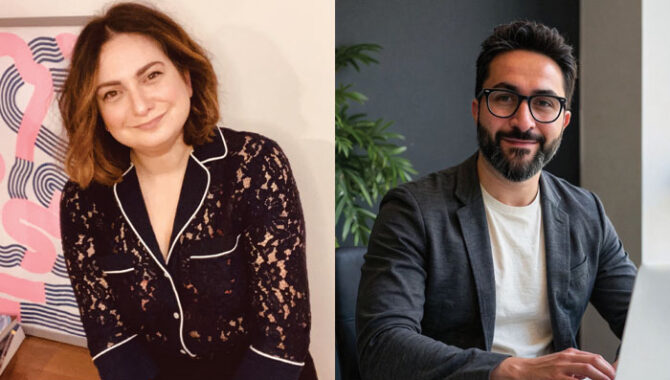
“We have lots of ideas and ambition, because the scope of this new adventure is huge!”: In conversation with SBC’s Sophie Bloomfield and tonies’ Rodolfo Amaya.
Guys, it’s great to catch up. In exciting news – tonies accessories are starting the journey to become more lifestyle, and as part of this you teamed up with Sophie Bloomfield on a softlines style guide. What prompted this move?
Rodolfo Amaya, Director of Product, Accessories, tonies: The whole ethos of tonies is: “Where will listening take you?” It’s ‘ears-first’ entertainment, which is amazing and resonates with everyone. So, we sell the Toniebox, and after the Toniebox we sell the figurines and games – and accessories come later.
With accessories, it’s about how can we make it easier for kids and their parents to listen to their tonies more. If we can help a kid take their Toniebox from their home to their grandparents’ house with a backpack, that’s a win.
In our 10-plus-year journey so far, tonies has been quite opportunistic. But in some markets, we have a legacy and huge awareness, like in Germany, so people expect our offering to be more premium and quality. So, we saw that there where gaps in how the brand shows up across different markets and we realised that we needed a more holistic and consistent message across the board.
And instead of us saying: ‘Let’s listen to Europe’ or ‘Let’s listen to the US’, we listened to the real customers and paid attention to the trends out there. That’s why we started working with Sophie, with the intent to listen to trends to then take them and implement into accessories.
And Sophie, what was your brief for this style guide?
Sophie Bloomfield, Creative Director & CEO, SBC: I knew Chris Becker – VP of Global Licensing & Partnerships at tonies – from his Sesame days and we had spoken before about how to turn corporate brands into creative lifestyle entities. That was the starting point. I gave some thoughts and that informed the loose brief which soon went in a softlines lifestyle direction.
And what did you play around with? What aspects of the tonies IP did you lean into?
Sophie: With corporate brands, it’s about looking at where the consumer meets the brand and their emotions towards it. Why would a consumer want to buy a tonies- branded product versus a different kind of entertainment IP.
I focused in on the storytelling and how children interact with the Toniebox – how they dream, grow and use their imaginations with this beautiful device. So my starting point was emotions, rather than any key storytelling beats you might get from a different kind of kids’ entertainment IP.
We also used the original tonies characters, but quite subtly because we wanted to focus more on storytelling. This guide isn’t character-driven. So we have used the iconic silhouettes of the tonies characters with the ears, but the assets are more to do with how kids interact with the brand.
Yes, you’re putting a lot into imagination right? Which can feel a bit intangible?
Sophie: Yes, it was about bringing that dreaminess to life and working with the brand’s core colour palette – which is beautiful. Then I looked at the brand’s core icons – like the ears – and brought that into visuals that represent the imagination and inventiveness associated with tonies.
Rodolfo: We’re in a super interesting situation where we want people to recognise our brand, but at the same time, we’re very focused on the emotions the brand delivers to kids. It’s part art and part science, and we’re on a journey. This is not the only guide we’re going to do, and we will express different things as kids evolve and the brand evolves as well.
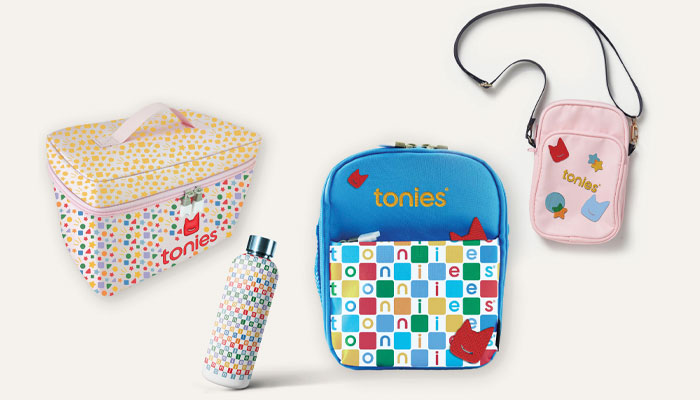
And look, if we wanted to keep things simple, we could just do backpacks. But we are looking at how kids actually use their Tonieboxes and how they display their tonies. We really want to be intentional. We know that the most important use case for tonies is for bedtime to listen to stories.
And there are peaks throughout the day where kids come back to those stories, right? Mealtimes, playtimes, winding down, different routines… And there’s white space for us… Is there a reason why kids are not using tonies at a certain times? Oh, because they’re at kindergarten. Well, is there anything we can do from an education point of view to help kids with what they’re doing at kindergarten? We have to be intentional.
How big of a creative challenge was this?
Sophie: It was a great challenge. I love doing character guides, and they’re slightly more straightforward than this kind of brief, but this project forced me and the team to think differently. It forces you to go into your inner child and think: How would I want to express it? And then you start looking into consumer and cultural trends, and the story starts to come together.
I really enjoy projects like this, where there’s a real focus on the strategic and commercial reasoning behind the creativity. I try and weave that into every project, but here it was front and centre from the off.
Do you see brand collaborations in the future of tonies’ licensing journey?
Rodolfo: I think it’s an opportunity. The reaction we get from our licensing partners is that they want to partner with us in building a world that is not that prescriptive – and that also opens up possibilities from an accessories point of view. We have lots of ideas and ambition, because the scope of this new adventure is huge!
When it comes to licensed accessories for tonies, what sorts of categories do you see potential in?
Rodolfo: Our approach is guided by five pillars. The first is relevance – whatever the accessory, it must fit naturally into a child’s everyday life. So, in that sense, the essentials are backpacks, night lights, shelves, headphones, things like that.
The second is meaning – these products must be meaningful to both kids and parents. And that even extends to colour palettes. If we go for an aggressive green, for example, that projects a meaning and vibe that might clash with what a parent wants in their home. So, we have to balance that carefully – something that Sophie has been fantastic at helping us with.
And pillar three?
Rodolfo: Pillar three is trustworthiness. Parents already trust us for content and quality when it comes to our devices, and that should be mirrored when it comes to accessories.
The fourth is playfulness in design. This might mean reflecting the Toniebox ears in playful ways across accessories. And finally, it’s about making these products feel unique. And that’s the journey we’re going to be on across the next five years.

Brands Untapped’s Billy Langsworthy heads to Milan to chat with Tela’s Gabi Drew and Nicol Vircillo about fandom – and why brands can benefit from a focus on human connection.

“Jem is an artist – and what comes with that is touring, residency shows and other theatrical pieces”: In conversation with Matt Proulx, SVP of Global Experiences, Partnerships, and Music at Hasbro.
“Brands are increasingly embracing gentle colour palettes, wholesome characters and positive messaging”: In conversation with Mima Creative’s Jemima Chamberlain.

“What are your biggest fears?” Heather Antos – IDW’s Senior Group Editor – asks some surprising questions…

A light touch for the Dark Knight: Simon J. Smith says Batwheels has some of his career-favourite ideas…

“You cannot approach a brand like Kodak or Philips or Electrolux with a generic playbook”: As LMCA turns 40, we catch up with President and CEO Ciarán Coyle.

Receive the Brands Untapped Newsletter




Enter your details to receive Brands Untapped updates & news.