—-
To stay in the loop with the latest features, news and interviews from the creative community around licensing, sign up to our weekly newsletter here


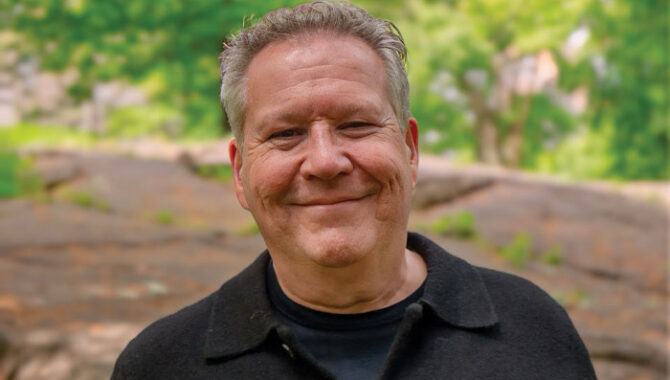
“You cannot approach a brand like Kodak or Philips or Electrolux with a generic playbook”: As LMCA turns 40, we catch up with President and CEO Ciarán Coyle.
Ciaran, this year sees LMCA celebrate its 40th anniversary. Which of the company’s core values are key to your success? Partnership has proven key – and not just in a transactional sense. Genuine partnership… We have many long-term partnerships, and trust is also important. When clients think about working with an agent in any regard – whether it’s an ad agency, a PR agency, a licensing agency – they have to share, or hand over, their crown jewels: their brand. And they need to know that’s going to be looked after.
Our model focuses on a small number of clients, but with deep relationships. That’s what LMCA is built on, and we continue to build on that. Ultimately, clients want to know you’re there, you show up consistently, you’ve got good strategic advice, and you’re not just pushing licensing, but rather looking at licensing as a business solution.
Perfect. Talk me through how that ‘business solution’ lens steers you?
Licensing is a business model, but it’s not the solution to everything. When we get into these quite deep conversations with clients about solving a business challenge – with some pretty senior people – we can see where licensing may fit and extend the brand…
We might also see how it could help a company launch a new division, or extend the company into a new part of the world. Licensing isn’t just about extending the product range – it can be about extending a client’s footprint.
“Licensing isn’t just about extending the product range – it can be about extending a client’s footprint.”
And what makes B2B licensing effective?
What makes B2B licensing effective is a fearless commitment to immersion. In B2C, audiences are intuitive – people are relatable by nature. Industries are not… You have to earn that understanding, and it requires a genuine willingness to go deep into a client’s world: its competitive position, its cost structure, how it goes to market, where it’s winning and where it’s under pressure. Only then can you design a program that genuinely moves the needle.
Can you give us an example of B2B licensing in action?
One of LMCA’s global clients is Castrol, one of the world’s leading lubricant brands. Castrol wished to venture into total automotive care, beyond oils and lubricants. As you know, one area you consider when changing or servicing your car is filters… And filters are a natural extension of that positioning.
By partnering Castrol with established manufacturers in each market, we were able to extend their brand into filters credibly and at scale, without Castrol taking on the operational burden of a multi-market manufacturing program. The brand reinforcement was real, the complexity was managed, and the program delivered commercial results across geographies simultaneously. That’s the kind of outcome licensing is uniquely positioned to deliver.
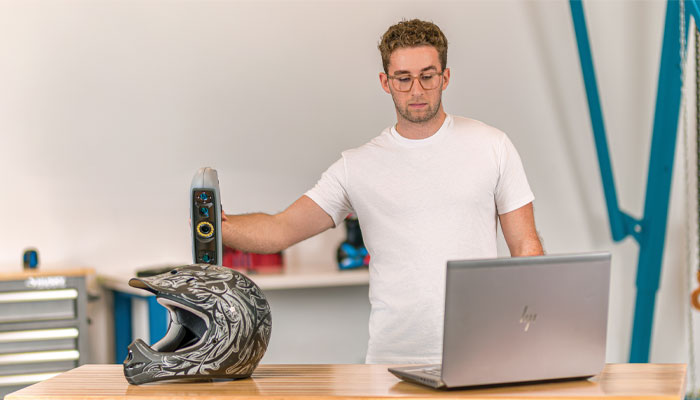
Another great example is the partnership between HP and Creaform. Can you tell me about that?
For nearly a decade, LMCA has served as the exclusive brand-licensing agency for HP. Their priority remains consistent… Find partners that enhance the core business rather than just benefit by association.
When we identified FARO Creaform – a world leader in 3D digital scanning and metrology – the strategic logic was immediately clear. HP leads in 3D additive manufacturing; FARO Creaform leads in 3D scanning. The two functions sit side by side in the product development lifecycle… That means the partnership is less about brand extension and more about turning adjacency into competitive advantage.
What have they created together?
They have created a line of HP-branded handheld 3D scanner solutions engineered to integrate with HP’s 3D printing workflows. For HP, the partnership expanded the ecosystem around their platform, giving customers another HP product in their toolbox. For FARO Creaform, alignment with a globally recognized brand accelerated their visibility and opened doors to new customers.
I know LMCA has several long-term clients. What are some of your north stars when it comes to enduring brand relationships?
Trust. It’s the foundation, and it’s necessary to start the conversation. No organisation is going to open its books, share its strategic anxieties, or invite you into its board-level thinking without a significant degree of confidence in who they’re working with.
But trust is only the beginning… Consistent performance is what keeps a relationship alive for 10 or 20 years – combined with intellectual honesty and a genuine commitment to the client’s long-term interests rather than your own short-term ones.
“Finding the right licensee has always been as much art as science.”
And consistency, in our experience, is built in person. You can manage a programme efficiently over a screen, but the relationships that have stood the test of time at LMCA are invariably the ones where we have put in the hours – on the factory floor, at the dinner table, in the boardroom.
And on the licensee side, what’s key to sourcing and working with partners?
A licensing program is only as strong as the licensees at its centre, and I think that point is sometimes underappreciated. We represent brand owners, but our ultimate measure of success is whether the program delivers value for everyone in the ecosystem: the brand, the licensee, and the end consumer.
Finding the right licensee has always been as much art as science. We’re looking for capability, yes, but also cultural alignment, commercial ambition, and the willingness to invest in the brand for the long term. What’s changed significantly is our ability to surface those partners more efficiently.
We developed a proprietary tool called LMCA Matchmaker specifically for this purpose. It draws on our decades of accumulated market knowledge and licensing expertise to analyse competitive dynamics and identify prospective licensees with a precision and speed that simply wasn’t possible before…
What previously took weeks of manual prospecting can now be accomplished in a fraction of the time – and with considerably more rigour. But the technology is the beginning, not the end. Once identified, the work of building a genuine partnership – understanding a licensee’s business, aligning on strategy, establishing the right foundations – remains deeply human.
I understand LMCA is having a rebrand?
Yes! A 40th anniversary is a natural moment for reflection, and we approached this rebrand as equal parts celebration and strategic exercise.
The celebration is genuine: four decades of building something meaningful is worth marking. But we were equally determined to use this moment to ask harder questions: does how we show up in the market today reflect who we’ve become? Any organisation that’s evolved as much as ours deserves a brand identity that keeps pace. Our team’s more diverse, our geographic footprint is broader and the range of perspectives we bring to every client has grown considerably.
So fundamentally, the rebrand is about ensuring our positioning reflects our evolution – the diversity of our team, the depth of our thinking and what genuinely sets us apart from other agencies in this space. We want the market to understand precisely who we are, what we do, and why it matters – the combination of unified strategic thinking and genuine, on-the- ground market knowledge that six international offices makes possible.
What fuels creativity within LMCA?
Creativity in our business is a function of diversity of perspective, geography and background – and a culture that genuinely encourages people to see things differently. When I look at what generates our best thinking, it’s almost invariably the product of people with genuinely different vantage points engaging seriously with a shared problem.
We have six offices across multiple continents, and the conversations that happen when those teams come together produce insights that no single office could arrive at independently. The person who has spent years building relationships in China sees an opportunity differently from the person who has been operating in the European market. That creative tension, managed well, is generative.
It’s also worth saying that creativity in our world doesn’t always look like what people typically associate with the word…
In what way?
It’s not always loud or obvious. It might be someone immersing themselves in a new technology and building something entirely new from it. It might be reframing a problem that a client’s been looking at for years… That quieter, more embedded form of creativity is what we run on – and it’s something we actively try to cultivate.
Also, the calibre of the brands we work with is a significant factor. There’s something inherently stimulating about working with organisations that have built genuine, enduring equity over decades… So that calibre raises the stakes, and it raises the quality of the thinking.
You cannot approach a brand like Kodak or Philips or Electrolux with a generic playbook. You have to understand what makes that brand meaningful to its consumers, what it stands for at a fundamental level, and how a licensing program can amplify rather than dilute that. That discipline, applied consistently across a diverse portfolio of global brands, keeps our thinking sharp.
A light touch for the Dark Knight: Simon J. Smith says Batwheels has some of his career-favourite ideas…
“The business has only grown because of the people in it – people who care about the work, challenge ideas and take ownership”: In conversation with Jason Knights, MD at Blue Kangaroo.

“Collaborating with incredibly talented artists is such an important part of what we do”: In conversation with Byron Williamson, License & Marketing Manager at Spike Leisurewear.

“In gaming, if you can’t adapt your IP to the visual and mechanical language of the platform you’re entering, you will fail”: In conversation with Elinor Schops, VP of Digital and Gaming at Miraculous Corp.

Kate Schlomann – EVP Business Development and Operations at Spiralcute – on what gives IP like Chiikawa, Mofusand and Koupen Chan licensing potential.

We take an inside look at the launch of the world’s first Bluey rollercoaster with Merlin’s Jonathan Lewis and Beth Clarke, and BBC Studio’s Natasha Spence.

Receive the Brands Untapped Newsletter



Enter your details to receive Brands Untapped updates & news.