—-
To stay in the loop with the latest features, news and interviews from the creative community around licensing, sign up to our weekly newsletter here



“What are your biggest fears?” Heather Antos – IDW’s Senior Group Editor – asks some surprising questions…
Heather Antos, you’ve described yourself as “taller in person, a destroyer of childhoods and a professional geek.” How tall are you?
Ha! I’m 5’10”, which is short in my family.
Is it? Gosh! And ‘destroyer of childhoods we’ll find out more about… Professional geek – lets get into that. What’s your actual job title?
I’m the Senior Group Editor at IDW Publishing. I oversee our crime imprint – which is pretty self-explanatory – and all things IDW Dark; our horror imprint.
Great remit! What kind of things does IDW Dark involve?
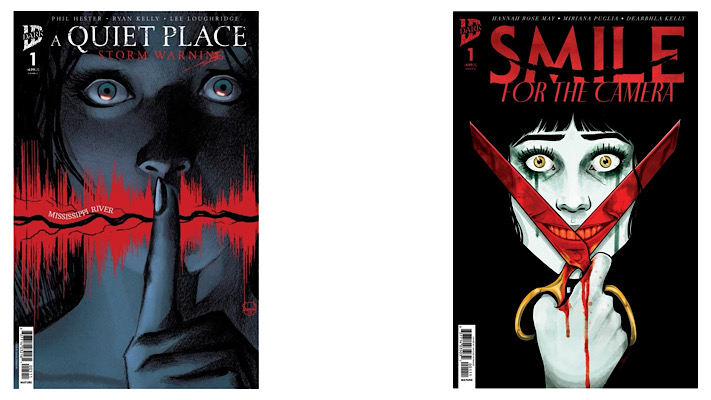
That involves our licensed partnerships with Paramount – Event Horizon, Twilight Zone, A Quiet Place, Smile, Sleepy Hollow. It also involves some of our historic, original creator-owned horror titles: 30 Days of Night, Locke & Key, Beneath the Trees Where Nobody Sees, The Exorcism at 1600 Penn. Over its 26 years, IDW has really made a name for itself as being a home of horror in the comic space.
From the names you said there, Event Horizon particularly intrigues me… Tell me a little about that.
We just completed our first volume of Event Horizon: Dark Descent which serves as a prequel to the film. Then we’ve started to release our sequel volume, which takes place 500 years after the film. The thing about that particular franchise is that – because it’s out in space; the middle of nowhere, and in this alternate dimension-y, hellish landscape – there’s so much room to explore…
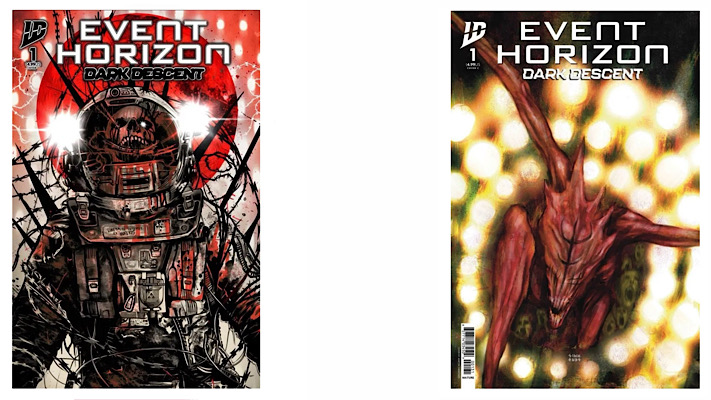
To some extent, we can go wherever we want, whenever we want. And Christian Ward, the writer of the Event Horizon comics, is really taking that full speed ahead in many different ways… I can’t say much more about that without getting too far into his plans – but we’re really pushing the boundaries of hell in space with that.
Hell in space… Tell me if I’m wrong here: my memory is that they filmed a lot more foootage for the Event Horizon movie that got cut because it was too horrific. Are you, in a comic, better positioned to explore the extreme edges of that?
Yes and no. I mean, ratings still exist – so what we’re allowed to show in a comic book still matters. We can’t go too extreme or else the comic itself would need to be polybagged to stop a kid picking it up and chancing across it. So ratings still matter. Also, for licenses like Event Horizon, A Quiet Place, Smile and so on, I’m very aware that those are Paramount franchises. So what we did has to match that brand…
So to your earlier point, about stuff filmed for Event Horizon that you can’t watch today, we can’t exceed that level in the comics That’s the brand! Another example is A Quiet Place… Those films are rated PG-13, so the comics themselves need to match that in terms of language, gore, the types of scares we’re allowed to do and so on. Meanwhile, Smile is rated R – so we can go a little further.
That makes absolute sense. I want to talk a little about your process… Just before we do, I’m curious: what comes before the process? Do you ever just look at a brand new IP and think, ‘Gosh! That’d make a wonderful comic!’
Sometimes, yes. Remember, though, that we have great partnerships with Paramount, Universal, Disney – whoever – and they often present us with their brand catalogue and say, in effect, ‘These are brands that we’re looking to do more with in the publishing space.’ Then, when we’re considering which brands to do a comic with, there’re a few key things I’m always looking out for.
Tell me!
One: is this something I’m personally excited by? Is this something I’m interested in, and something on which I would want to work? Because I really want to be excited about the comics I’m putting out there. Two: is the existing audience of this brand already in comic shops?
Ah! So not just a pre-existing audience? But one that – to some extent – is likely to open to a change in medium?
Right. It has to have a translatable audience; it’s like a Venn diagram. If we were talking about A Quiet Place, say, or Smile, we’d be fairly sure that the people that like those movies already go to comic shops. Otherwise, I’m trying to get someone who’s never walked into a comic shop, maybe never even read a comic, to change a lifetime habit just to pick this product up. It doesn’t matter how big some franchises are, their fan bases just aren’t going to do that. Another consideration – particularly with Hollywood – is whether or not everyone is on board in terms of likeness rights.
Great point. So let’s take The Shining, for example. If I thought ‘The Overlook’ would make an amazing comic, it would need Stephen King to back it, the Kubrick Estate and Warner Bros.? And even then, it couldn’t heavily encroach on the movie, presumably, because Jack Nicholson is so protective of his likeness?
Exactly. Similarly, there are some actors that Paramount CBS doesn’t have the rights to use from the Star Trek franchise – so we can’t do anything with those characters. Another example you might find interesting is Scream…
The Scream movies?
Right. The studio doesn’t own the rights to the Ghostface mask. So they license one of the most iconic parts in their own franchise because the first film was this ambitious, independent horror… Understandably, they used an off-the-peg costume prop to make their film. Then it got huge – but they never bought out the rights to use that mask. So to this day, Ghostface is an entirely separate agreement from Scream.
That’s so interesting.
That’s the part of this that I get so nerdy about! I personally love all of these intricacies, but – professionally speaking – it’s important to keep in mind that you can’t always use the most interesting parts or characters of an IP… You have to ask what you’re left with if you can’t! What stories can I tell without them? Would a comic like that be successful?
Wow! So now… If you’re working with a larger franchise, and it meets the criteria we’ve discussed, what happens next?
Well, it does depend on the partner and on the IP. But there’s one thing I always want to do – especially when establishing a relationship with a new studio or director… I always want to make them feel comfortable; I want them to know that we care just as much about their baby as they do. So I’ll go to them and share a couple of top-level creative directions, and then I’ll ask: “Am I on the right track?”
This is before you speak to any creatives your end?
Yes, before I speak to a writer, before I speak to an artist… Because I want to approach creators confident that I have a safe sandbox for them to play in. And – on that – another question I like to ask brand people is, “What are your biggest fears?”
Oh! Amazing question!
And “What are the rules?” At other times, I might ask what they’re working on currently – just so I know not to go in that direction! I really do want to get a sense of their parameters so that – when I do go to creators – I know I can make them feel confident that they’re in good hands too. Actually, quite a lot of my job is making everyone feel confident that we’re on the right track.
I’m loving this! You were at Marvel before IDW, were you not? What were you working on there?
When the Star Wars line launched in 2015, I helped do that with Jason Aaron, John Cassaday, Kieron Gillen, Salvador Larroca, Mark Waid, Terry Dodson… That was the big, big, BIG launch; around the time that Force Awakens was coming out. I also worked on the Deadpool line around the time that movie was came out. And I co-created the character Gweenpool for Marvel while I was there as well.
And how did you come to be doing this, Heather? What made you such a geek is actually the question I’ve written down! Ha!
Ha! I think everyone’s a geek about something, you know? But the term geek – in reference to different areas of pop culture – is where it may or may not be a status symbol of coolness! What’s considered cool? It depends on what you’re a geek about… If you’re a geek about fashion well, that’s probably cooler than being a geek about comics, right?
Right. Actually, I often wonder if there should be a hierarchy of geekiness! It might help us all orient ourselves…
For myself, I was raised the only girl in a huge family of boys. I also grew up in a small town in the middle of nowhere; all I really had was my imagination. So I’ve been writing and drawing my own stories since I was a little kid. As my mum says, I drew comics before I knew what comics were!
And that’s not hyperbole? It’s literally true?
Yes, I’ve always just been so fascinated, I think, with storytelling and creating worlds that are larger than life. Because in that small town there wasn’t much to do when you were bored. You just rode your bike to Walmart to hang out and see who else was hanging out at Walmart! So stories, imagination and creating have always appealed to me – whether it was when I learned video editing, theatre, dance, play or just drawing art… I also love the aspect of creating with a group of different people.
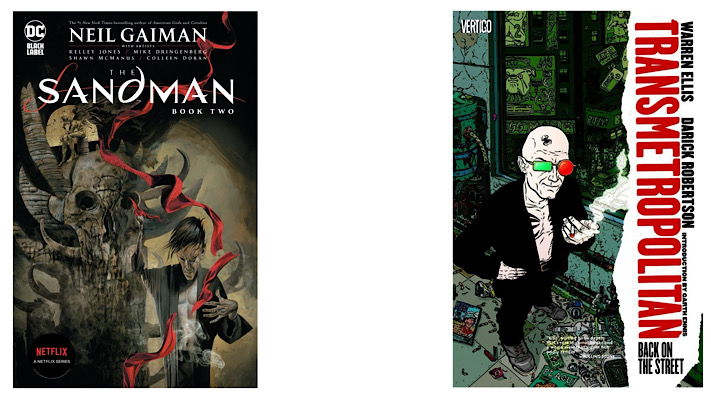
So you can imagine when I learned about comics in my university years, it was just such a cool thing! To know that a group of people got to collaborate together on these projects – and that it wasn’t just superhero stuff! Because, obviously, I grew up with the same superhero TV shows and movies and all the stuff that everyone else did. But when I was in college, I took an American literature course and studied a lot of the classic Vertigo stuff.
Such as?
Oh, I was introduced to The Sandman and Transmetropolitan and Hellblazer and a lot of that material. And I was surprised to find that comics can be horror, they can be crime. They can be so many things away from what most people might assume comics are. Later – when I was staring down the barrel of adulthood and trying to figure out what I wanted to do with my life – a friend of mine said to me, “Well, you like comics. Why don’t you just do that?” And that really sparked something in me because it was just so interesting to know people do actually do this. And I wanted to know how! How do I get to do this?
You’re a born storyteller! How, Heather? How do you get to do this?!
Ha! Well, I love a challenge. I love a puzzle. So I put it together! The first thing I did was look at the comics I read myself and really think about what jobs there are in comics. There’s the writer and the artist – we all know about those roles. And writing could be interesting, but I think I’d get bored of it after a while. And drawing… Well, I think comic artists are some of the most insanely talented and insanely masochistic people that exist anywhere in the world!
Ha! But you can write? And you can draw?
Yes, but I don’t pursue the writing. I think I’d get bored with it if I had to do it. That’s my ADHD brain there! And the drawing… Well, I have drawn comics and I just have so much respect for comic artists. I couldn’t do that as a job though; that’s way too much work! Beyond that, I noticed that every single book had the credit of an editor.
And – at that time – did you understand what being an editor entailed?
Kind of. I knew what an editor did in traditional publishing, like working with a novelist. And I knew it was a very one-on-one relationship: it’s the writer and the editor, and that’s kind of it. But in comics, there’s the editor and the writer and the artist and the colorist and the letterer… There are so many other moving parts.
I was also aware of, and came to think in terms of, big universes… You have your Deadpool book, which falls into the X-Men group, which falls into the larger Marvel universe for example. So I wondered how you coordinate all of that because there are so many things to keep track of there. That’s what really fascinated me about this role in particular. And like any good millennial, I just started tweeting editors to see who would talk to me. This was before Twitter is what it is now.
And what is Twitter now?!
Uh, well… Now it’s X!
Ha! Very good!
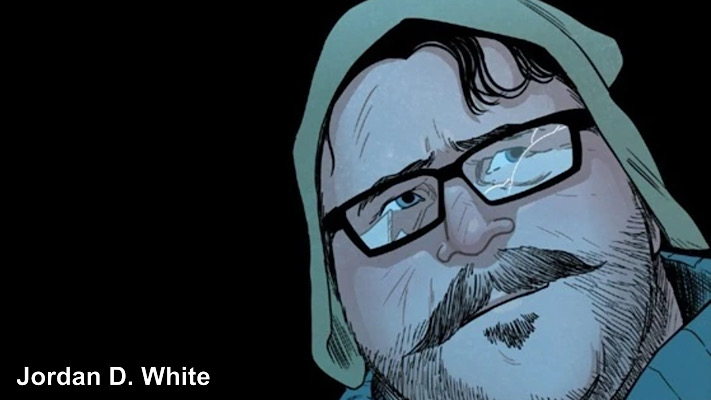
Ha! I don’t like to think about it! But back then, when it was still Twitter, I could reach out to the Marvel comics editor Jordan D. White. That’s how I met him… I found out he was going to be at Chicago Comic & Entertainment Expo and – since I was also going to be there as well – he agreed to sit down and talk with me about what a comic editor does. And he did! This was in March 2014. I left that convention saying, “This is it. This is what I want do. I’m going to figure it out.”
After that, I just started putting together a bunch of self-publishing projects because I knew that all writers want do is write, all artists want to do is draw. They don’t want to have to find each other, get their work printed, find distributors or do any of that other stuff… So I coordinated all of that just to get the experience and build my own resume. And through that, I ended up putting together one of the first Kickstarter anthologies.
Goodness me! This is amazing… What was that called?
It was called Unlawful Good: An Anthology of Crime. Happly, it ended up being quite successful. Then – six months later – I was at New York Comic Con and I ran into Jordan White again. So I got to show him what I’d done since we last spoke. I said I’d done this and that; I’d edited comics, I’d produced them, you know? “I’m doing it!” And he said, “Would you ever move to New York?” And I said, “Yes!” One month later, I was interviewing for Marvel. Two months later, I had a job and moved to New York City.
Good LORD! I love this! You really engineered it, didn’t you?! And you know, as you’ve talked, I’ve noticed a couple of things about you. First, you’re very expressive with your hands which is, I think, often the sign of a good communicator. Second, it strikes me that you’ve got an extraordinary balance between your creative mind and your logical mind. Is that fair to say?
What makes you say that?!
You’ve got the gift of ADHD, you draw, you write, you tell stories, you use your imagination… But then you’ve spoken about a tremendous skill: being able to say, ‘Well, these are the steps…’ Breaking down a huge goal into tiny goals – and then moving towards them.
You know, I think I’ve learned how to weaponize my ADHD! That’s how I like to say it. I’ve turned it into my mutant superpower.
Ha! Tell me more! How do you weaponize your ADHD?
For instance, ADHD people tend to be the greatest of procrastinators. So we love a deadline because then we can just wait until five minutes before… That’s when we’ll do the paper, and then we’ll get an A+ on it! Ha! But personally, I’m more likely to admit when I don’t feel like doing one task or another and choose to do another task instead. I do love a list! So I just go through all of my lists like that until I can’t procrastinate anymore.
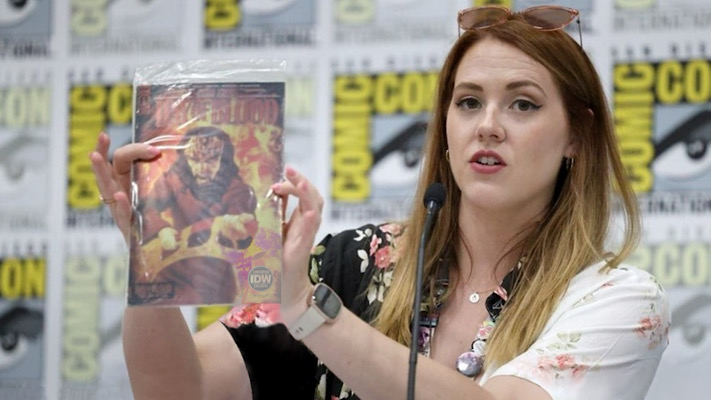
So that logical part of you is creating order and structure…
Yes. I love a list, I love a routine, I love a formula, I love things like this. I also think it’s the nature and nurture of it all. My father was very much the “You get up at 6:00am!” type; “You’re wasting daylight!” you know? And if you’re not up by 8:00am, he’s dragging you out of bed!
I do also think I have an engineering brain, really, and that comes in useful on a day-to-day basis because comics involve breaking things down into so many steps. That’s especially true when working with licensors, brands and creators. There’s a lot of problem solving and adapting that needs to happen… But I also need to be able to see ahead in order to hit my deadlines, hit my budgets, hit my goals, hit the larger picture while dealing with the day-to-day minutia.
Amazing. I have one last question to wrap things up, Heather… Are there any dream licenses that you’d love to work on?
Oh, there are a couple I’ll happily talk about because I’ve been very vocal about them online! First, I absolutely love Indiana Jones – it’s one of my first loves. Obviously, it’s with Disney, which is in the Marvel wheelhouse so if anything was ever going to happen with Indy, that would be where it would happen. Then, my other love – again, I’m so loud about this online – is James Bond… I absolutely love James Bond, and I don’t think the franchise has had the comic run it deserves.
Fantastic answers! Thank you, Heather… Gosh, I loved every second of that. Thank you so much!

A light touch for the Dark Knight: Simon J. Smith says Batwheels has some of his career-favourite ideas…

“You cannot approach a brand like Kodak or Philips or Electrolux with a generic playbook”: As LMCA turns 40, we catch up with President and CEO Ciarán Coyle.
“The business has only grown because of the people in it – people who care about the work, challenge ideas and take ownership”: In conversation with Jason Knights, MD at Blue Kangaroo.

“Collaborating with incredibly talented artists is such an important part of what we do”: In conversation with Byron Williamson, License & Marketing Manager at Spike Leisurewear.

“In gaming, if you can’t adapt your IP to the visual and mechanical language of the platform you’re entering, you will fail”: In conversation with Elinor Schops, VP of Digital and Gaming at Miraculous Corp.

Kate Schlomann – EVP Business Development and Operations at Spiralcute – on what gives IP like Chiikawa, Mofusand and Koupen Chan licensing potential.

Receive the Brands Untapped Newsletter




Enter your details to receive Brands Untapped updates & news.