—-
To stay in the loop with the latest features, news and interviews from the creative community around licensing, sign up to our weekly newsletter here



“Licensing has become a really exciting part of what we do.” In conversation with Lulu Skantze, Publisher at Storytime.
Lulu, we are sitting comfortably, so tell us the Storytime story… And specifically, what was the spark that gave you the idea and inspiration to get started?
Storytime started from a very simple – and slightly frustrating – observation that, at the time, 12 years ago, there were no children’s magazines centred around stories. It often felt like the story was secondary to everything else – and yet we knew stories were the best way for children to learn and engage with the world. There are an infinite number of stories out there, and yet many of them hadn’t been published in years – or ever.
We wanted to create something rich and immersive, where children could fall in love with reading through stories, without distractions, plastic toys or brand noise. The quality of the publication was very important to us: editorial, paper, zero plastic, original content – all the things we love in publishing, as grown-ups, but felt were missing in children’s publishing. We didn’t want to sell anything else – which is why there’s no advertising inside – but wonder.
We hoped that if we gave children excellent stories, beautifully made for them, they would fall in love with it. And they did.
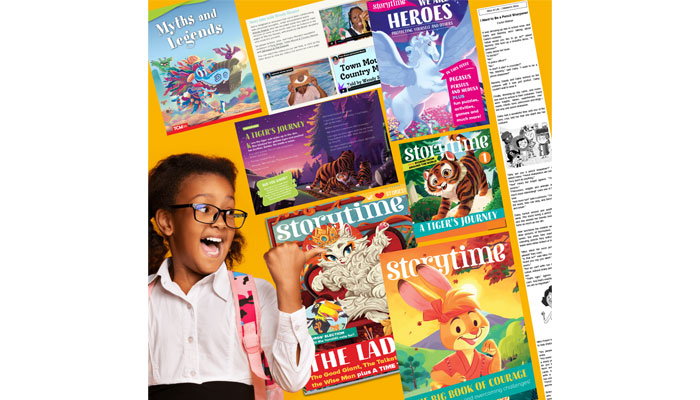
Storytime is now an international success. How did you ensure the brand, the stories and content worked internationally?
Stories travel when they tap into something human – emotions, curiosity and imagination – so we focused on that. We are inclusive in our content, but we also want to learn through it. We do a lot of research into folklore, cultural references and places. We revisit classics and forgotten tales and ask how they might live today. We invite readers to discover artists too from all over the world – but they also inspire us… It’s a big creative exchange and everything is part of a shared language. Our creative process has helped us join the dots to create a richer universe for the brand.
We also recognise that our readers are more global than ever – they’ve experienced more of the world at an earlier age than previous generations. Children respond to wonder, humour and adventure, and they are incredibly curious about other cultures, from a place of curiosity not prejudice – which we love to nurture. So, we take them there… And often, we go there with them.
What elements do you think make Storytime special?
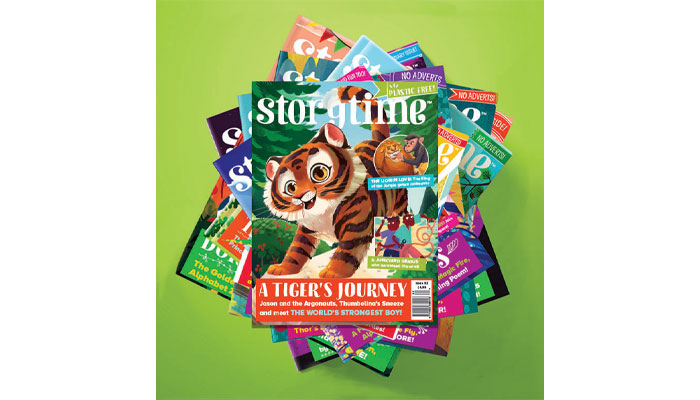
At its core, it’s the commitment to storytelling and quality. Every issue is carefully curated with eight stories of different kinds and made by different artists. It’s rich and varied, almost like an art magazine, which is quite rare in the children’s space. There’s a real respect for the reader and for their time. Then there’s the multimodal layer – print, digital, audio, activities – all working together so children have agency in how they experience the stories. Most importantly, we care about how it makes children feel. If they feel curious, enchanted, capable and included, we’ve done our job.
You are clear that play is a key to childhood development. How do you introduce play into Storytime? What elements do you prioritise to make an activity engaging?
Play is part of the storytelling experience, so we design activities that extend the story – games, crafts, recipes and prompts – everything works as a small invitation to imagine further. For something to be engaging, it needs to be open enough for children to make it their own. We really avoid being too prescriptive. While we offer a bit of structure, we always make sure we leave plenty of room for imagination. Also we always pair stories with play, because when you play with something, you remember it better.
You have created over 1,000 stories so far for Storytime. How do you keep your content fresh?
Curiosity, mostly. We’ve never stopped looking for new sources of ideas or stories to uncover. We draw from everywhere – folklore, history, science, everyday life, and even the news! The world is full of stories if you’re looking for them. We come back from holidays with a legend we read by a lake, a sign in a square, or a conversation we overheard.
We also challenge ourselves constantly on variety – tone, structure, theme and reading level. Personally, stepping away from the desk helps. Reading widely, travelling, listening to people – that’s where the best ideas come from. And luckily, everyone in the team agrees!
How do you work with designers and illustrators? Is there a set style you look for illustration wise?
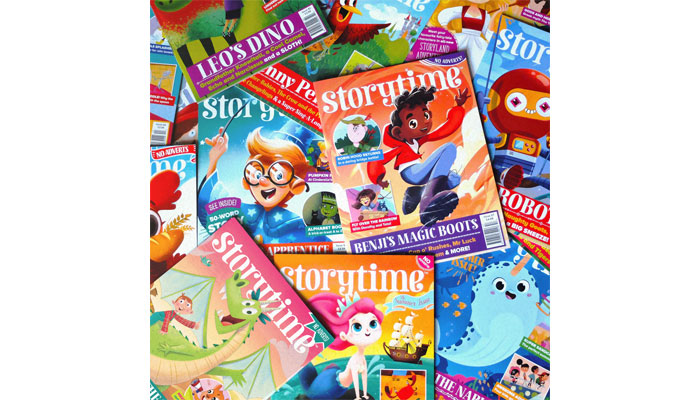
We work very closely with our artists and give them real freedom on the page – it’s always been a true collaboration. There isn’t one fixed style; quite the opposite. We believe illustration is storytelling in its own right, so we invite artists to interpret the story than telling them what it should look like.
And just like with stories, we look for talent everywhere.
I screenshot work I love, go through the hundreds of portfolios we receive, take part in portfolio reviews, and discover artists in both expected and unexpected places. Most of my phone’s memory is from screenshots of illustrations I think! There is so much incredible creativity out there, and we love giving children the chance to experience new styles.
You license your content to third parties. Can you tell us more about this side of your business and share some examples of successful licensing partnerships you currently have?
Licensing has become a really exciting part of what we do. Having worked with many licensed brands before, we understood the value of building something well-structured and cohesive from the start. Because we own our content and assets, we can adapt it across formats, languages and markets quite easily.
We work with partners in publishing, education and digital platforms to bring Storytime to new audiences, which, as a small publisher, has been essential to our growth. It also means we don’t need to master every format and technology but by knowing the assets well we can work together in making it a success. The key is always alignment so we look for partners who value the quality of the stories and want to build something awesome.
You have managed to create a product that operates across print, audio, digital and is interactive. What’s the formula for ensuring content works across each platform?
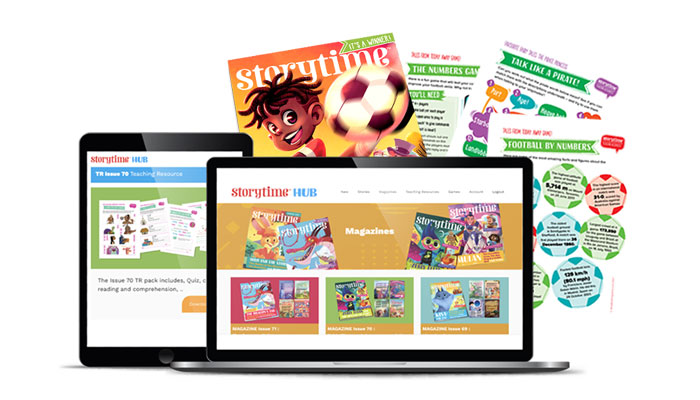
We always start with the story. The printed format originally set the rhythm – the monthly release, the visual richness – but the story remains at the core. Each format has brought a new layer to the creative process though. Audio made us rethink pacing and language – we now read everything aloud from the start – and digital allows us to expand and be more interactive. Each format does something best but it only works if the story is strong enough to carry across all of them.
What lessons do you think that the book publishing world can learn from Storytime and vice versa?
Magazines are very good at rhythm, discovery and variety. There’s a playfulness and accessibility that really supports reading for pleasure. Books offer depth and immersion in a different way – and they are wonderful objects, really. I value that, and it’s something we aspire to across everything we create.
Childhood is about seeing things for the first time, so we need books to fall in love with and magazines to talk to us about the things we love. A book might start us on a subject, while a magazine keeps that conversation going. They work well together in building worlds around what children love.
What’s next for Storytime?
We’re continuing to expand internationally, through licensing and new formats. Our aim is to be “Your World of Stories”, so we’re exploring new ways to experience storytelling – potentially including gaming and new products. There’s also a big focus on education this year, with the National Year of Reading, which I want to continue into 2027. We’re working closely with schools, libraries and families to support reading habits, clubs and programmes.
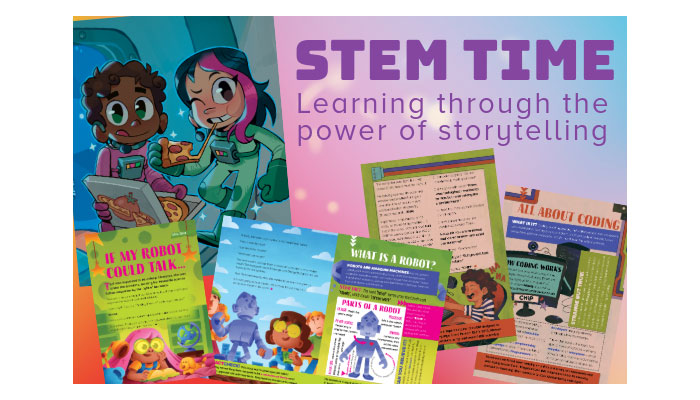
We also launched STEM Time last year, which has been incredibly fun – so we’ll continue building that, bringing science into storytelling.
Finally if you had to nominate a ‘Best of’ Storytime – what would be your top three story picks and why?
That’s always the hardest question as I still get excited every time a new issue comes out. Sometimes I suspect that striving for the “best is yet to come” keeps me going! Though if I have to pick three, here is why I’d choose these ones:
The Curly-Tailed Lion (Issue 93) – a forgotten fairy tale that felt incredibly relevant today. A lion taken from the African savannah becomes a trend in the Dutch Empire, only to be discarded when something new comes along (Tulips!). It’s a funny and slightly sharp reflection on attention, social media and trends, very modern in spirit. And Julia Cherednichenko, the Ukrainian illustrator who did it, is amazing. I find super interesting when classic stories are still so relevant because it reminds me of the power of stories.
Awesome Adventures are our real-life stories with a twist. We tell the childhood of remarkable people, but only reveal who they become at the end. It’s about showing children that everyone starts somewhere and inspire them to overcome adversity. These are some of the hardest to write and needs tons of research, but are also incredibly rewarding. I’ve learned about new people too, looking for those who inspire me – so I’d highlight issue 106, “The Greatest Gift of All”, the story of Fatima al-Fihri. Incredible story and like many other women, was almost forgotten in history.
Then I’d pick our STEM Time first cover story (Issue 133), Deep Space Delivery. I’m very proud of this newer section. It explores how discoveries often start with curiosity, accidents or simple questions and turns them into stories led by children. It mixes fiction and non-fiction in a new way and has made us revisit a lot of subjects from our school years, so we’re loving it.
Together, they represent our values, how we keep challenging ourselves creatively and hopefully fill our reader’s world with wonder and possibility.

A light touch for the Dark Knight: Simon J. Smith says Batwheels has some of his career-favourite ideas…

“You cannot approach a brand like Kodak or Philips or Electrolux with a generic playbook”: As LMCA turns 40, we catch up with President and CEO Ciarán Coyle.
“The business has only grown because of the people in it – people who care about the work, challenge ideas and take ownership”: In conversation with Jason Knights, MD at Blue Kangaroo.

“Collaborating with incredibly talented artists is such an important part of what we do”: In conversation with Byron Williamson, License & Marketing Manager at Spike Leisurewear.

“In gaming, if you can’t adapt your IP to the visual and mechanical language of the platform you’re entering, you will fail”: In conversation with Elinor Schops, VP of Digital and Gaming at Miraculous Corp.

Kate Schlomann – EVP Business Development and Operations at Spiralcute – on what gives IP like Chiikawa, Mofusand and Koupen Chan licensing potential.

Receive the Brands Untapped Newsletter





Enter your details to receive Brands Untapped updates & news.