—-
To stay in the loop with the latest features, news and interviews from the creative community around licensing, sign up to our weekly newsletter here


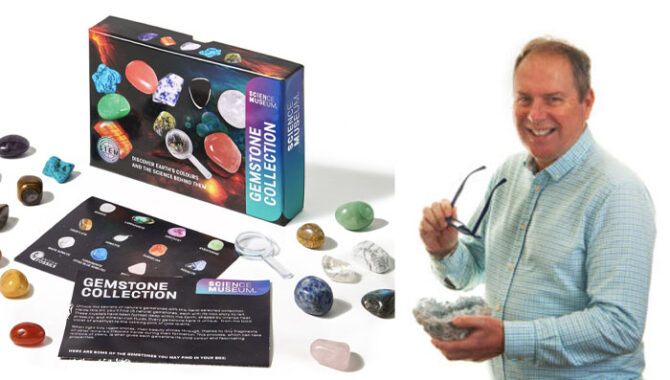
“Licensing allowed us to combine our expertise in sourcing and packaging natural history products, with their authority in science education”: In conversation with British Fossils Director John Mark Cook.
British Fossils recently launched a new collection in conjunction with the Science Museum. What attracted you to working with the Science Museum – and licensing?
The Science Museum approached us after seeing the way we present rocks, minerals and fossils as accessible gifts for museum and visitor attraction shops. For us it was a very natural fit. The Science Museum is one of the most respected science institutions in the world and its mission of making science engaging and understandable aligns very closely with what we have been doing at British Fossils for over 40 years.
Licensing with them allowed us to combine our expertise in sourcing and packaging natural history products with their authority in science education. The result is a range that feels both authentic and educational, but still works as a strong retail gift product.
Absolutely – and how did you find the design and development process with The Science Museum?
The process was very collaborative. Our team brought experience in product development, sourcing minerals and fossils, and designing packaging that works in retail environments. The Science Museum team helped ensure the products reflected real scientific learning and their brand values.
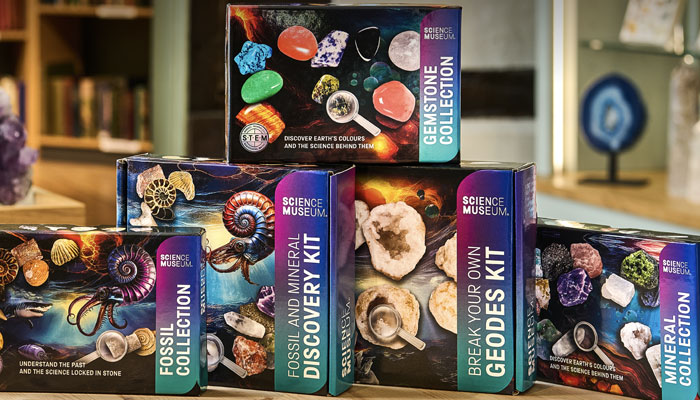
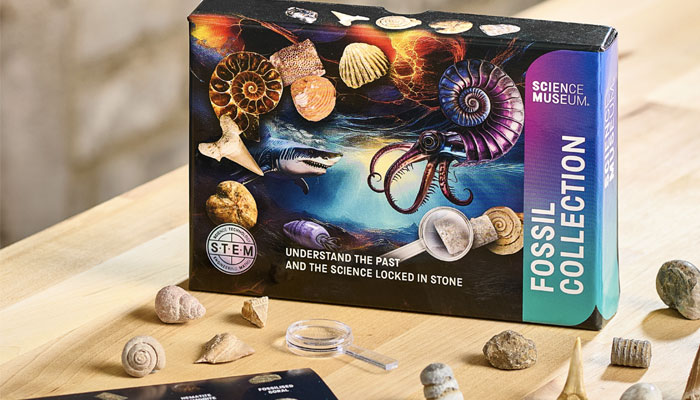
We focused on creating a range that felt hands-on and discovery based. The range includes products such as a Fossil Dig Kit, Break Your Own Geode Kit, Crystal Growing Kit and a Mineral Discovery Kit, all designed around genuine geological specimens. The design direction was kept clean and educational to reflect the museum brand, while still being colourful and engaging enough to work in a gift shop environment.
You exhibited the range at the Spring Fair. What was the reaction like?
The reaction at Spring Fair was extremely positive. Retailers are always looking for products that feel a bit different from standard gift lines, and natural history products have a strong sense of curiosity and discovery around them. The kits such as the Geode Break Kit and Fossil Dig Kit in particular attracted a lot of attention because they give the customer a small ‘science experiment’ experience at home.
They work particularly well as gifts because they combine three things… They contain real natural specimens, they have an educational story and they are visually interesting and interactive. That combination makes them appealing to both children and adults, which is quite unusual in the gift sector.
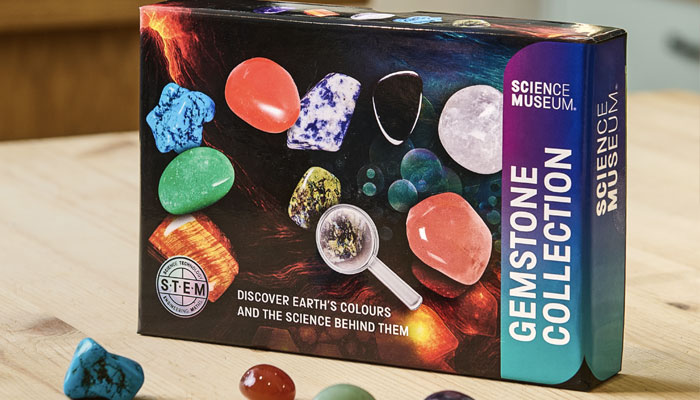
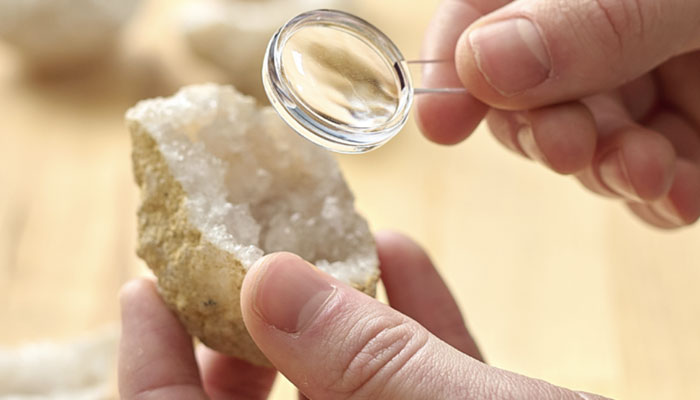
The products come with STEM credentials. What features have you included to make sure they deliver in this regard?We made sure the products genuinely support STEM learning rather than simply using the label. The kits include real specimens together with clear, simple information about geology, fossil formation and mineral structures. A good example is the Break Your Own Geode Kit, where the customer opens a natural geode to reveal crystals inside that have never been seen before. That moment of discovery is what really brings the science to life. The aim is to spark curiosity and encourage people to learn a little more about the natural world through a hands-on experience.
Thinking about gift and toy retailers, can you tell us how your products fit into these sectors and how retailers can successfully add them to their offering?
Our products sit very nicely between the gift and toy sectors. They are impulse gift items in terms of price and presentation, but they also have an educational and discovery element that appeals to toy and hobby retailers.
Retailers tend to do best when they display the products together as a small themed section – for example a science discovery display featuring fossils, geodes and crystal kits. The visual impact of real rocks and fossils attracts attention very quickly and encourages customers to pick them up and explore them.
Returning to licensing, has the Science Museum experience encouraged you to look at more licensing opportunities?
Yes, it has been a very positive experience. Licensing can work extremely well when there is a genuine connection between the brand and the products. In our case, natural history, science and education are already central to what we do, so working with institutions like the Science Museum makes a lot of sense. Going forward we would certainly consider other partnerships where there is a strong natural fit.
How do you market your products to consumers?
Our primary focus is still the gift trade, so we market mainly to retailers through trade fairs, catalogues and our sales team. That said, social media is becoming increasingly important for showing the products in action. Platforms like Instagram and TikTok are very visual – and rocks, crystals and fossils are naturally interesting to look at. Short videos showing geodes opening, crystal growing experiments or fossil discoveries tend to attract a lot of attention online and help drive consumer interest into shops.
Beyond the Science Museum, are there other new product launches for 2026 that you can tell us about?
We have a number of new launches planned for 2026 including new mineral gift products, gemstone items and expanded discovery ranges. Typically we are working 12 to 18 months ahead on product development. That allows time for sourcing specimens from around the world, designing packaging and testing the products in retail environments. Working with natural materials adds an interesting challenge because every fossil or mineral specimen is slightly different.
Finally, thinking about the world of fossils, is there a particular person that has inspired your love of the subject over the years?
Mary Anning is probably the most famous inspiration in the world of fossils. Her discoveries along the Jurassic Coast helped transform our understanding of prehistoric life, and she did this largely through curiosity, persistence and careful observation. What stands out about her story is that she helped change scientific thinking through determination and passion, which is exactly the sense of discovery we try to capture in our products.

A light touch for the Dark Knight: Simon J. Smith says Batwheels has some of his career-favourite ideas…

“You cannot approach a brand like Kodak or Philips or Electrolux with a generic playbook”: As LMCA turns 40, we catch up with President and CEO Ciarán Coyle.
“The business has only grown because of the people in it – people who care about the work, challenge ideas and take ownership”: In conversation with Jason Knights, MD at Blue Kangaroo.

“Collaborating with incredibly talented artists is such an important part of what we do”: In conversation with Byron Williamson, License & Marketing Manager at Spike Leisurewear.

“In gaming, if you can’t adapt your IP to the visual and mechanical language of the platform you’re entering, you will fail”: In conversation with Elinor Schops, VP of Digital and Gaming at Miraculous Corp.

Kate Schlomann – EVP Business Development and Operations at Spiralcute – on what gives IP like Chiikawa, Mofusand and Koupen Chan licensing potential.

Receive the Brands Untapped Newsletter




Enter your details to receive Brands Untapped updates & news.