—-
To stay in the loop with the latest features, news and interviews from the creative community around licensing, sign up to our weekly newsletter here



Licensed Ltd’s Paul Bufton looks at how fans creators are paving the way for a new era in licensing.
Fans have always been the heartbeat of every successful consumer products programme.
Since the dawn of modern fandom, licensing and merchandising have evolved from pure revenue drivers into fully-fledged engagement ecosystems. The model – often visualised as concentric circles radiating from the passionate superfan at the centre – reminds IP owners that nurturing the core keeps the whole community alive. Take care of your superfans, and the rest will follow, as each layer aspires to that ambassadorial status.
But superfans aren’t just consumers; they’re collaborators. As active participants in a franchise’s trajectory, they help sustain enthusiasm across the wider fanbase through their creative output, shared expertise and social energy.
Creative output is the purest expression of fandom. Visit any convention and you’ll find artists and custom action-figure makers selling their creations to fellow fans. Fan fiction, meanwhile, has long expanded fictional universes and given a voice to under-represented communities. This creative output naturally leads to commercial expression – the moment when fandom and entrepreneurship collide.
“As fandom fragments into smaller, more passionate factions, products and experiences become ever more powerful touchpoints.”
Pivot to the live-music scene and you’ll find a parallel story. Driven by rising ticket prices and reduced accessibility, tribute bands have never been more popular – and many even sell their own increasingly sophisticated merch at gigs.
Which raises an important question: how can fan creators generate revenue from their passion, while respecting and protecting the IP of brand owners? Some entertainment companies already manage this balance carefully.
Within the Star Wars universe, Lucasfilm and Disney have established clear guidelines to support fans while maintaining control of their IP and trademarks. Fan films, videos, and artwork are permitted provided they are non-commercial and clearly marked as ‘fan-made.’ Logos, character likenesses, or anything implying official endorsement remain strictly off-limits. Cosplay communities are likewise encouraged to thrive – so long as they stay true to these same guardrails.
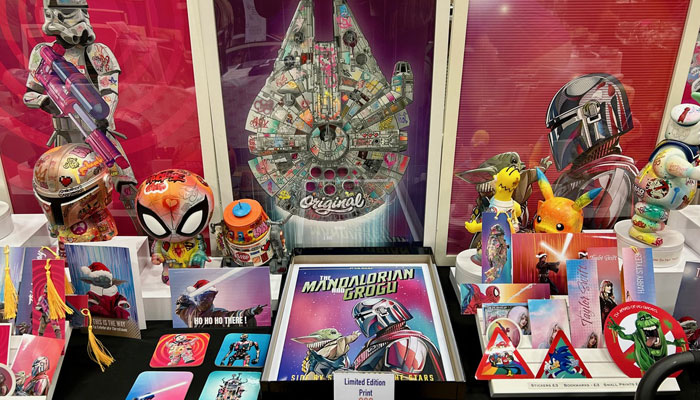
Few have embraced fan-driven commerce more wholeheartedly than The Grateful Dead. Since the 1960s, fans have travelled with the band on tour by creating and selling handmade merchandise. Today, that grassroots spirit lives on through Shakedown Street – an organised marketplace at every show – where some vendors have even become official licensees, gaining the benefits of formal brand association.
As fandom fragments into smaller, more passionate factions, products and experiences become ever more powerful touchpoints. Here’s how rights owners can support fan commerce while protecting their IP:
• Enable micro-licensing: Allow limited fan production (up to X units) under clear rules to unleash creativity and extend reach with minimal risk.
• Publish transparent guidelines: Make fan-merch rules public to avoid ambiguity and build trust.
• Protect brand integrity: Enforce caps, disclaimers and design standards so fan products complement rather than compete.
• Leverage community energy: Empower fans as micro-licensees and advocates – building authenticity, loyalty and long-term engagement.
• Introduce tiered models: Offer a step-up path from non-commercial fan creation to formal licensing as projects scale.
Ignoring or policing the issue isn’t a solution. The future of brand engagement will be defined by a simple truth: by the fans, for the fans.

Meredith Counts, VP of Creative at Jewel, looks at why joy is no longer just a feel-good footnote – but a business strategy in which licensing can thrive.

Licensed Ltd’s Paul Bufton puts ‘Original Gamers’ in the spotlight – and looks at how brands can best engage with this exciting audience.
Creative Director Sophie Bloomfield looks at how archived IP can enjoy new life at retail.
What’s the verdict on the Science Museum’s Star Trek Warp Trail partnership? “Fascinating” says Deej Johnson.

As London Book Fair 2026 closes, we find some licensed titles among the stuff we love…

From games and TV shows to lost movies and more: the hit-and-miss licensing of Spy vs Spy.

Receive the Brands Untapped Newsletter
Enter your details to receive Brands Untapped updates & news.