—-
To stay in the loop with the latest features, news and interviews from the creative community around licensing, sign up to our weekly newsletter here


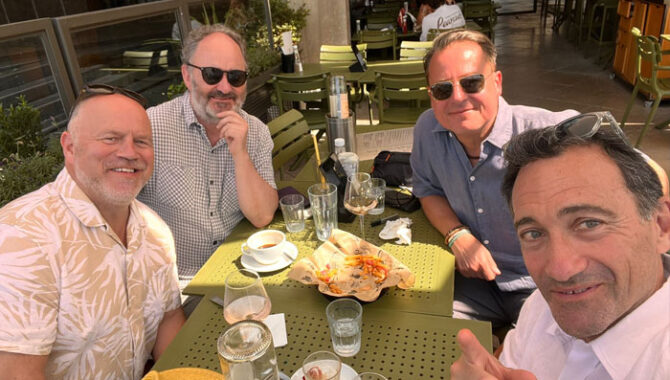
Start Licensing’s Ian Downes discusses industry twists and turns with three of his former colleagues from Copyright Promotions – Simon Gresswell, Andrew Levy and Daniel Avener.
Start Licensing’s Ian Downes recently caught up with three of his former colleagues from Copyright Promotions. Ian worked with Simon Gresswell, Andrew Levy and Daniel Avener in the mid -1990s – at the time CPL was one of the leading licensing agencies in the UK and Europe, with representation that included Star Wars, The Beano, Mr Men and Hanna-Barbera.
Ian talked to his former colleagues about some of their recollections about licensing from the time they worked together and got their insights into some key licensing topics of the moment.
CPL was eventually absorbed into the WildBrain group of companies, while Andrew, Simon and Daniel went on to have very successful careers in licensing across a range of different roles and companies.
“The most progressive brand owners see licensing as a strategic growth platform.”
Guys, it’s great to catch up. Andrew, at CPL you worked extensively on deals with FMCG companies. How would you ‘sell in’ the benefits a character brand to supermarkets today?
Andrew Levy, Founder & Director, Ateliers Verts: Some sectors are driven by characters, like the celebration cake sector, where a ‘hot’ character will help drive sales. Supermarkets are always looking at ways to increase margins. If you can add a character to a product and demonstrate that sales and distribution should increase, as well as margins, it’s a win-win. The trick is to use a character whose equities match the product and not just perform a label-slapping exercise… Think Spider-Man Squirty Cream cans!
Simon, you spent a lot of time working on licensed promotions and partnerships. What makes a ‘good partnership’ in licensing terms? And has this changed over the years?
Simon Gresswell, Founder, SGLP: The simple answer is that it’s a win win where objectives are targeted and achieved for all parties – but that’s hard to accomplish in commercial reality… Especially when ‘all’ means IP owner, agent or CP department, licensees or branded partner and critically the retailer – be that online, scomm/ecomm, B&M or other channel… Or activated via apparel, grocery, department, fuel, banking, hospitality, travel, value or the myriad of other retail sectors.
I don’t think core objectives for both parties have changed necessarily, but licensors and agents have – or should have – become more sophisticated, using key data as a basis for an approach or pitch, and focusing on client objectives driving everything from the cold call onwards. Licensed partnerships in sport definitely demand more demonstrable ROI, value and fan growth, and are more akin to sponsorship than before.
Daniel, what makes for a successful collaboration in your opinion?
Daniel Avener, Founder, Magic Hat: The best collaborations never feel forced. Consumers are incredibly sophisticated today and can immediately recognise when two brands have come together simply to create publicity. The collaborations that resonate are those where both brands share authentic values, complementary audiences and a genuine reason for existing together.
“Licensors and agents have – or should have – become more sophisticated, using key data as a basis for an approach or pitch.”
I always look at three things… Is there genuine strategic and cultural alignment? Does each partner bring something meaningful that the other doesn’t have? Will the collaboration create something that neither brand could have achieved independently?
The commercial model is obviously important, but successful collaborations are ultimately built on trust, shared ambition and a commitment to creating genuine consumer value. The best collaborations don’t simply generate headlines – they create memorable consumer experiences, strengthen both brands and often become long-term partnerships rather than one-off campaigns.
You have worked a lot with brands and brand owners. Do you think brand owners ‘trust’ the licensing model more these days? Should more brands be thinking about licensing?
Daniel: Absolutely, but I think the conversation has evolved. Historically, licensing was often viewed simply as a royalty-generating exercise. Today, the most progressive brand owners see it as a strategic growth platform. When executed well, licensing enables brands to enter new categories, reach new audiences, increase cultural relevance and generate incremental revenue without the operational burden of manufacturing and distribution.
The brands achieving the greatest success today don’t ask, “What can we put our logo on?” They ask, “Where does our brand have the permission to exist?” That shift in thinking is fundamental.
Trust has also grown because there are now far more examples of licensing creating genuine enterprise value rather than simply generating short-term income. The strongest programmes are highly curated, strategically managed and relentlessly focused on protecting long-term brand equity.
So yes, I absolutely believe more brands should be thinking about licensing – but only if it’s approached as a long-term strategic capability rather than a tactical commercial exercise.
When we worked together at CPL there was a lot of emphasise on ‘new business’ and opening up fresh categories for licensing. What categories do you think are ripe for development in terms of licensed promotions in today’s market?
Simon: Well, I’m biased here as my time after CPL with The Continuity Company – now TCC Global – was one of the most enjoyable in my career. We created IP-based concepts for collectible loyalty promotions, while simultaneously negotiating the rights or options and then developing the product, marketing and comms behind each one. Although these programmes have thrived in various markets, there is still room for more and better programs based on established, prestigious IP.
I was proud and fortunate to work with lots of National Football Federations, where I was bringing them new opportunities and new revenue streams. That said, in sport I still don’t these types of licensed promotions have been maximised, due to rights constraints and old-fashioned thinking in some cases. With ‘new’ retail sectors in play, more could be done in this area, with greater reach and revenue as a result – and without negatively affecting the sponsorship landscape.
What examples from your early days in licensed promotions could we learn lessons from and build on in 2026?
Simon: Two areas spring to mind. Firstly, the early days of experiential here in the UK. My former CPL colleagues may not want to remember the doomed IP that was Scavengers… A senior exec from a big leisure group and I travelled quite some distance during both our holidays in order to see a pilot in production at Pinewood, that we and they knew far too little about! Net result, you can guess… No cigar! Integration and immersion of potential partners is crucial as early as possible – and better concepts!
“We had to make design boards by hand back in the day and now AI can do it in seconds.”
Secondly, referred to as ‘clip licensing’ or ‘licensed ad campaigns’ back in the day, which are commercial areas that have grown vastly in the last 25 to 30 years – and even morphed into bespoke animations etc for brand ad campaigns. I really enjoyed soft selling ideas and the CPL portfolio of client brands to ad agencies back in the early/mid 90s for the likes of Hanna-Barbera and LucasFilm. Aardman mastered the latter and both areas have spawned so many branded characters over time, albeit none of them ever quite cut it versus established classics.
And Andrew, going back to food – but away from cakes! – does a category like fresh produce present a new opportunity for licensing. Could licensing do more to promote ‘healthy eating’?
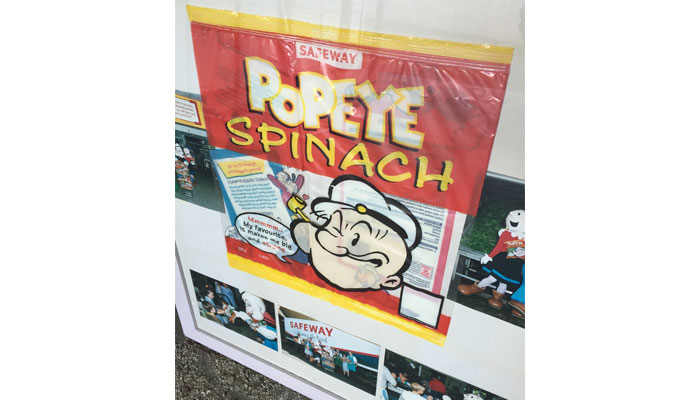
Andrew: Absolutely to both! Take the core equity of a character – say it likes to play rugby – and apply it to a commodity like oranges, which could be eaten at half time… It then makes sense for a retailer to stock character branded oranges to attract a new audience and add value. We did exactly that with Popeye – who eats spinach – and Fresh spinach – a commodity – back in the day to attract kids to eat spinach.
And design-wise, what are some of the biggest changes you have seen in how licensed products are designed over your career?
Andrew: Design has changed immeasurably! We had to make design boards by hand back in the day and now AI can do it in seconds. Product designs, concepts, in-store presentations are easy now. This goes for licensed and regular design.
Materials have improved in a more eco direction too, so the space for design has changed. Good licensed design must come from professionals though – it’s art, unlike everyone with a mobile phone who thinks that they’re a professional photographer… They’re not!
Daniel, coming back to you for a moment – what advice would you give to an IP owner looking to break into the licensing market today? How do they get themselves market ready?
Daniel: My advice is always to prepare before you approach the market. Many IP owners understandably focus on finding licensees, but the first question should be whether the brand is genuinely ready to be licensed.
That means understanding your brand positioning, identifying where you have authentic permission to extend, defining clear category priorities, protecting your intellectual property, establishing comprehensive brand guidelines and developing a commercial strategy that potential partners can buy into.
Equally important is demonstrating that there is real consumer demand. Licensees are making significant commercial investments, so they need confidence that they’re investing in a brand with momentum, relevance and long-term potential. Ultimately, licensing isn’t just about having a great brand. It’s about presenting a compelling business opportunity.
Great answer. Last question, and it’s one for you all… From your career to date, has there been one deal that you can point to that you think represents the ‘best of’ licensing? Why do you think it worked so well?
Daniel: It’s a great question, but if I’m honest, the things I’m most proud of aren’t necessarily individual deals. For me, success has always been about building long-term strategic platforms rather than simply signing transactions.
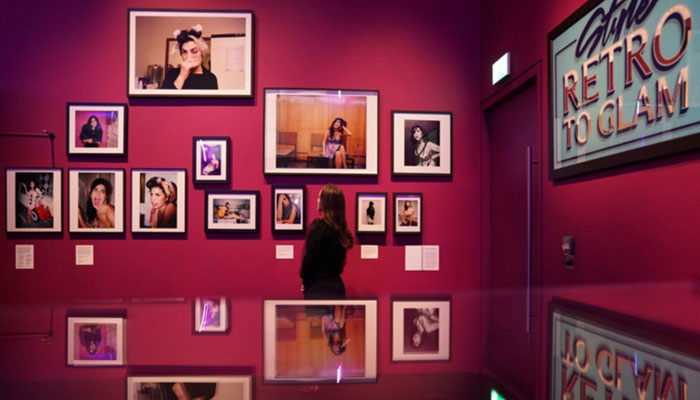
I’m incredibly proud of the work we did with the Amy Winehouse Foundation, helping create the Amy Winehouse experience at the Design Museum. That project demonstrated how brand extension can celebrate a legacy in a way that is authentic, culturally relevant and genuinely meaningful to fans.
I’m equally proud of our 13-year relationship with Hershey’s, where the focus was never on one agreement, but on building a long-term international growth strategy that continued to evolve over many years. Working with FIFA was another career highlight. Rather than thinking purely about licensing around major tournaments, we helped develop strategies that enabled the brand to engage consumers year-round, creating value well beyond the event cycle.
Those experiences reinforced something I’ve believed throughout my career: the best licensing isn’t about chasing individual deals. It’s about building sustainable platforms for growth that create long-term value for brand owners, commercial partners, retailers and consumers alike.
Across my career, I’ve been fortunate to work with major global brands and high-growth businesses across more than 18 international markets. Our experience has consistently delivered commercially successful programmes, many of which have received industry recognition and awards, but the common thread has always been the same – they started with a clear strategic vision. The commercial success followed because the foundations were right.
Ultimately, that’s what I believe represents the very best of licensing. It’s not about signing the biggest deal. It’s about creating partnerships, platforms and experiences that strengthen brands, build lasting relationships and continue delivering value for years to come.
Simon: For me, there’s plenty of promotions with FMCG brands, some of which have been revisited over and over again… But for pure product deals, I would say the licensed deals for Monopoly AWP and SWP machines – fruit machines and quiz machines for those that remember – the forerunners to other physical and digital ‘soft touch gambling’ games of now. Blanket coverage across the UK and later European on-trade outlets – and very healthy royalty cheques. But it also perfectly matched IP and gameplay. It was an interesting sector and industry to delve into as well, with some great characters of its own.
Andrew: Two come to mind. I was fortunate at CPLG to work on an absolutely incredible range of licenses – and one of the biggest deals I did was via Co-Op’s then supplier FE Barber. They invested hundreds of thousands, even producing Dennis The Menace shaped cereal – and cola, biscuits and crisps.
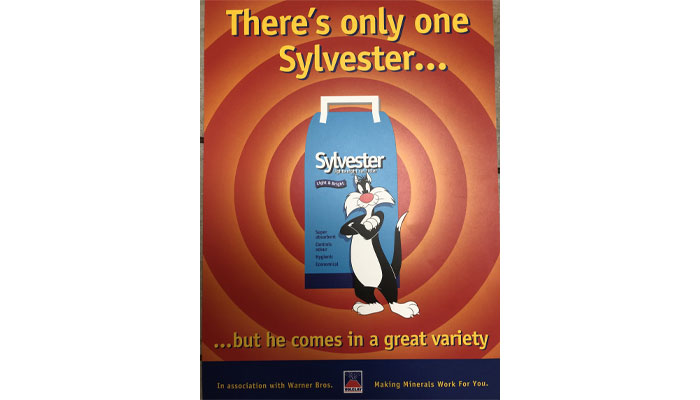
The second is when I became independent, I launched Sylvester Cat Litter via Warner Bros and Volclay. It sold well internationally. The character was a natural fit with the product.
Jack Fox, Sales & Marketing Director at Rubber Road, talks TUBBZ Mystery Eggs – and why Minions were a perfect fit.
Spin Master Co-Founder Ronnen Harary talks to us about his exciting new book, working with inventors – and Spin’s most underrated launch.
How Speed Arena: Race in a Case became an instant hit: in conversation with Carrera Revell’s Frank Tiessen.
“I guess I never really grew out of it…” Barry Eldridge onwhat makes a license right for Factory Entertainment.

“A good collectible used to be about likeness, now it’s more about interpretation”: In conversation with YuMe Toys’ Gurdeep Bains.

“I look at a plug socket and my brain turns it into a character!”: In conversation with Furry Puppet Studio’s Zack Buchman.

Receive the Brands Untapped Newsletter



Enter your details to receive Brands Untapped updates & news.