—-
To stay in the loop with the latest features, news and interviews from the creative community around licensing, sign up to our weekly newsletter here


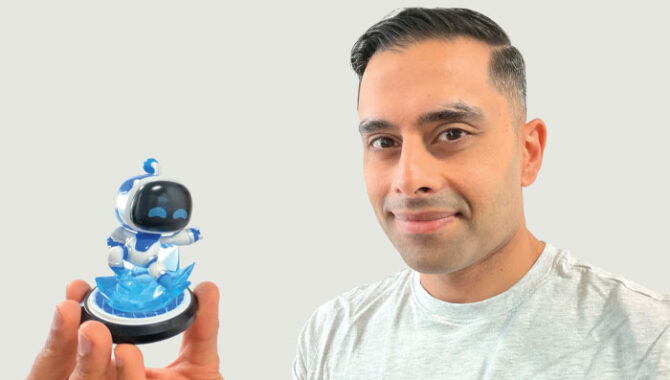
“A good collectible used to be about likeness, now it’s more about interpretation”: In conversation with YuMe Toys’ Gurdeep Bains.
Gurdeep, it’s always great to chat. Collectibles and the world of Kidults are hot at the moment – but this isn’t anything new for YuMe! Talk me through the company’s history in this space? Is it fair to say you played here before it became ‘hot’ to?
It’s probably less that we “played” in the space early, and more that we never really saw a distinction to begin with. We’ve always designed with the assumption that people, regardless of age, want things that feel considered. Not just products, but almost art pieces. That naturally led us towards fandoms and collectibles long before “kidult” became a category in its own right.
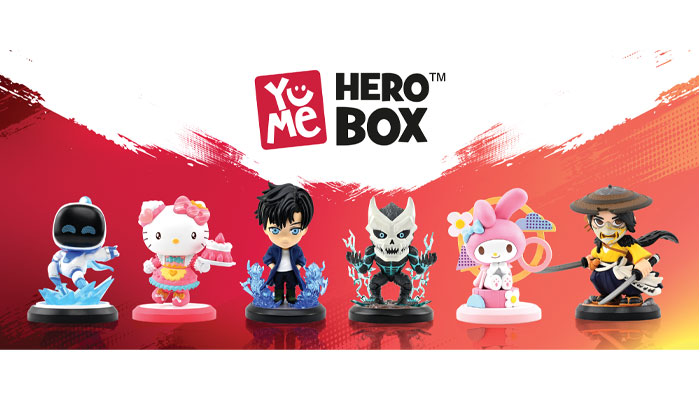
Hero Box reflects that thinking quite well. On the surface, it’s a blind box. In practice, it’s a way of framing an IP through a specific lens, cinematic, graphic or nostalgic – without overworking it. There’s a certain discipline to it. So while the market has caught up and given it a name, for us it’s been more of a steady evolution. Less about reacting to a trend, more about refining how collectibles can feel quieter, more deliberate, and ultimately more lasting.
You embraced Stranger Things before it was the mammoth brand it is today – how important is it for YuMe to be an ‘early adopter’? And what helps guide where the next key opportunity could be?
We’ve never been overly concerned with being first. With Stranger Things, it was the tone as much as anything. We all enjoyed watching the show, the atmosphere, the great story, the 80s references, the sense that it had a life beyond the screen. That’s usually the signal for us.
We look for IPs that have a clear visual language. Something you can distil without losing its identity. Formats like Hero Box allow us to act on that instinct quickly, because the structure is already there. The focus becomes the edit – what moment, what pose, what interpretation best captures that world.
Anime is another area that continues to be a strong example of this. It has clarity. It translates. So it’s not about chasing trends. It’s about recognising when something has enough depth to sustain a collectible journey and then approaching it with a bit of restraint.
What were some of the key aspects to the success of those early product ranges from a design perspective?
A willingness to edit. It’s easy to overwork well-known characters, but we found early on that the more you strip back to what actually matters, the silhouette, the posture, the attitude, the stronger the result tends to be. Hero Box reinforces that discipline. It gives us a consistent framework, so the creative work sits in the nuance rather than the noise. Small shifts in pose or proportion can carry quite a lot. The unboxing moment plays its part, of course. There’s always a sense of anticipation. But it’s only the beginning.
The more important question is whether the piece holds its own afterwards, whether it earns its place on a shelf. We tend to design in sets rather than singles. Not simply for completion, but for how it sits together visually. That’s where it starts to feel less like accumulation and more like curation.
What role do formats like Hero Box play in how you work with licensors and IP partners today?
It’s become a fairly natural starting point. Hero Box gives us a shared language with licensors. It’s a format that’s proven commercially, but open enough to allow for creative interpretation. That balance tends to create more interesting conversations. We’re not just asking which characters to include, we’re looking at how an IP should be seen. What’s the right lens? What hasn’t been overdone?
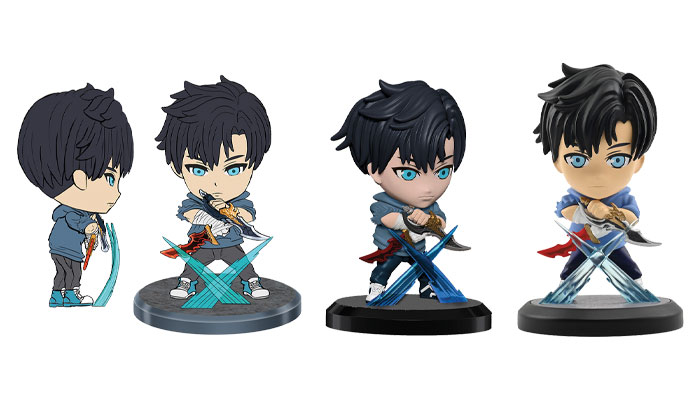
Because the format is flexible, we can adapt to the tone of each brand, whether that’s something more graphic, more cinematic, or more stylised, while still maintaining a cohesive series. It also creates continuity. Rather than a single product, you’re building a collectible arc over time. That’s valuable for licensors, but also for fans. Hero Box also brings collectibles to a mass audience as the price point is accessible, so the product is more affordable to a wider audience.
What do you think defines a great collectible today, and how do you ensure YuMe stays ahead creatively?
A good collectible used to be about likeness. Now it’s more about interpretation. People don’t just want accuracy, they want something that feels thought through. Something that reflects the character but also carries a point of view. That’s where design comes in. For us, staying ahead is not about doing more but doing less, and doing it better. Being selective in what we choose and disciplined in how we execute it.
Hero Box plays a role here because it gives us a consistent base to work from, which means we can focus on the creative decisions that actually matter, how something looks, how it sits, how it builds over time. And ultimately, it comes back to respect. Respect for the IP, and respect for the audience. If you get those two things right, you tend to stay relevant without having to chase it.
“I guess I never really grew out of it…” Barry Eldridge onwhat makes a license right for Factory Entertainment.

“I look at a plug socket and my brain turns it into a character!”: In conversation with Furry Puppet Studio’s Zack Buchman.

Illustrator Emily Abeydeera reveals the one thing she always does creating Disney Lorcana cards.
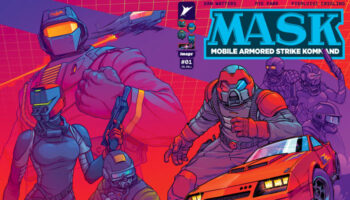
We take a look at the creative process behind the latest title in Hasbro and Skybound’s interconnected Energon Universe – M.A.S.K.
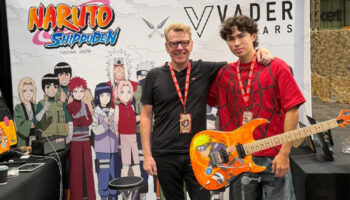
“A good licensed instrument can encourage people of all ages to pick up an instrument!” In conversation with Paul Smith, Co-Founder at Vader Group.

How do you capture the frenetic energy of Monster Jam in creative? StyleWorks Creative’s D. Thomas Froberg and Alaina Caldwell reveal all.

Receive the Brands Untapped Newsletter




Enter your details to receive Brands Untapped updates & news.