—-
To stay in the loop with the latest features, news and interviews from the creative community around licensing, sign up to our weekly newsletter here


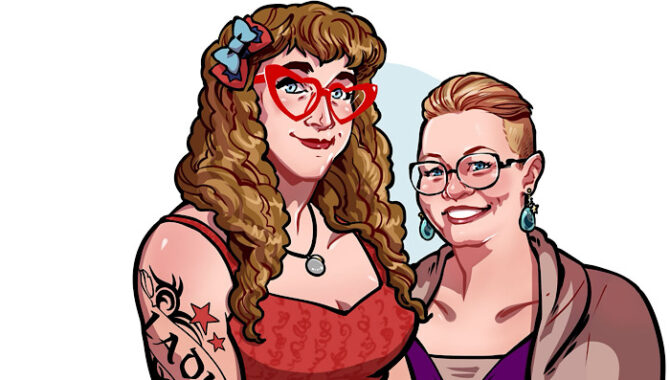
Writers Susan and Tilly Bridges discuss their approach to storytelling for licensed comics.
Susan and Tilly Bridges, welcome… As a writing team, you’ve worked on a number of licensed animations. Monster High comes to mind, as does Star Trek Prodigy – season two. And then there’s the comic project: Star Trek Voyager – Homecoming. To start off, what is it that draws the two of you to sci-fi and fantasy in particular?
Tilly Bridges: I’ve just always been a giant genre fan – especially sci-fi. I don’t know what it is that draws me to it so much… I guess it’s because there’s no restraint on your imagination. If you can think it up, you can find a way to make it happen. And I really love that because I’ve got a giant imagination; it never stops! I also love the way that sci-fi can be used allegorically to talk about present-day issues that we’re going through as a society. That’s famously the case with Star Trek… When you couple those together, sci-fi is my favourite.
Makes absolute sense. And Susan?
Susan Bridges: I think Star Trek was probably my gateway to genre, really… Imagining a better world where there’re competent people treating each other with respect. I think that’s a real big call – and it only becomes more of a thing to hold onto in the times we happen to be in, I would say.
I hear you! The darker the night, the brighter the flame. In terms of your creativity around existing IP, do the inherent restrictions help more than they hinder, do you think?
Tilly Bridges: I think the restrictions are fun. They’re a challenge at times, but as a writer, you try find a way to make what you want to do work within whatever box the rights holder has told you to stay in. You just have to remember that the goals of the corporations that own properties are different to the goals of people telling stories around them. I’ve always found that to be a very illuminating challenge – it’s taught me a lot. And I think it’s made us better writers.
Susan: I also think a lot of creativity comes from just seeing one little thing in existing IP and thinking: ‘Okay… What if we spun that out into something? What if they said that because this happened?’ Or ‘Why did this character do this weird thing here?’ So I think now we just look at restrictions as a super-fun challenge. That’s especially true with the Voyager comics, for example, when we realised – while doing our research – that Species 8472 doesn’t actually have that many episodes…
No, they’re in – what? Four?
Tilly: Yes, and they get mentioned in a couple more. So things like that give us all these little things where we could just kind of expand out, wonder, explore and find new things that we could add that hadn’t been expounded upon in the universe. That gave us a lot of freedom, and we do love finding the cracks between known stories that you can fit a story in… So it’s like, ‘What happened between these two scenes? You could fit a whole story in there!’ It’s a great challenge. I wouldn’t want to write every story we do that way – ha! But for some of them, it’s absolutely great.
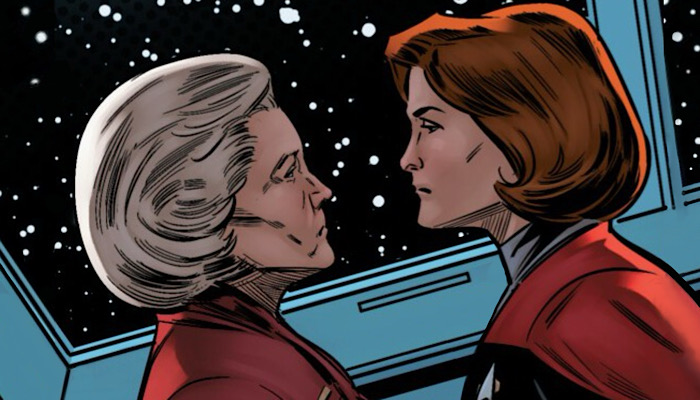
And on that, the Homecoming comics pick up immediately after the last scene of Voyager’s final episode, Endgame. Why did you want to continue the story?
Tilly: That was mostly due to the finale itself – which we liked a lot! But some people felt that, for seven years, the crew’s goal was to get home and reunite with their families. And then you didn’t see that! It felt like you didn’t get that kind of closure. We wanted to give them the show, the characters and the, the audience that closure, but also bring back consequences for some of the things that they’d done, because they made a lot of people mad in the Delta Quadrant!
Susan: Yes, and it raised questions around some of their decisions… Would some of those decisions come back to haunt them? There were so many possibilities around that. One thing we decided quite early on is that we didn’t want The Borg to be the main villain because we felt like they did so much Borg material during the TV episodes. So that was the main thing we started with: talking about which villain it would be, and what we should do.
Ah! I’m glad you said that; I was going to ask where you started…
Tilly: Yes. That’s one of the things unique to working on a licensed property… After we had some ideas, we went back and forth with both Paramount and the comic publisher, IDW, over who the main adversary would be and what would or wouldn’t work for one or other of them – because they have other things going on in the universe! So there was a lot of back and forth before we settled on Species 8472. I’m really glad we did, though, because it gave us a lot of room to explore and add little bits to the universe.
I love this! But now I’m curious… After you settled on the broad idea – it’s the end of Voyager and it’s Species 8472 – what’s your process? How do you get from there to a manuscript?
Tilly: Well, it started with us re-watching Voyager to see what we’d forgotten. I mean, we’ve seen all the Voyager episodes many, many times, but we went back to them to be sure we had it all fresh in our minds… You know, the show ended 25 years ago!
Quite so. In fact, this article will probably go in the newsletter 25 years to the week since the last episode premiered! But what came next? After you rewatched the episodes?
Tilly: After that, the two of us brainstormed to get a rough idea of what we wanted the story to be. When we had some ideas, we’d give an issue-by-issue outline of the story to IDW and Paramount for them to approve.
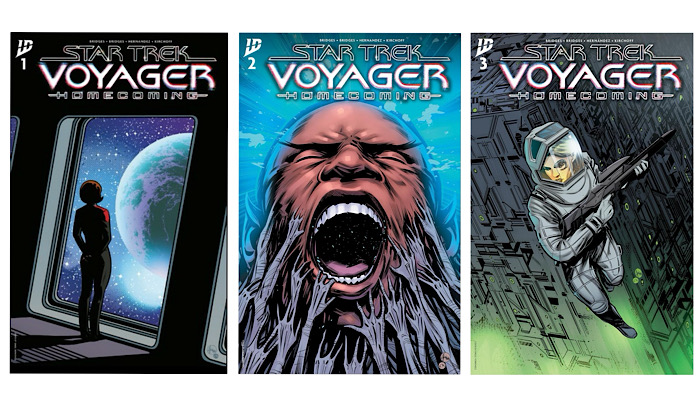
Susan: There was a bit of back and forth with them asking to change this or that… It was filtered through them at every step of the process. Also, that gave us a couple more boxes to work in because they wanted the books to be accessible to people who may not have watched Voyager, or who may not have seen it for 30 years…
Oh, wow! I hadn’t thought about that – I guess it makes sense.
Susan: This is why the first issue of Homecoming introduces the concept of Voyager as a show and pretty much says, ‘This is what happened in Voyager over seven years; this is how it started and how it ended… Then it introduces all the characters and kicks off the story. And we have 20 pages to do that.
And I suppose the length of the comic is quite a definite limitation, isn’t it?
Tilly: Yes, 20 pages is really tough. And comics are unique in that there’s another limitation in the way that dialogue covers art… It takes up real estate on the page! You can only fit so much dialogue on before it starts to obscure the illustrations! That means you have to cut the wording back and back and back so that it all works together. So it was a very puzzly project.
You know, that is staringly obvious now that you’ve said it, but I hadn’t thought of that! You’ve got to keep it really succinct. So do you edit as you write? Or do you write what you want to say, then go back and cut it down?
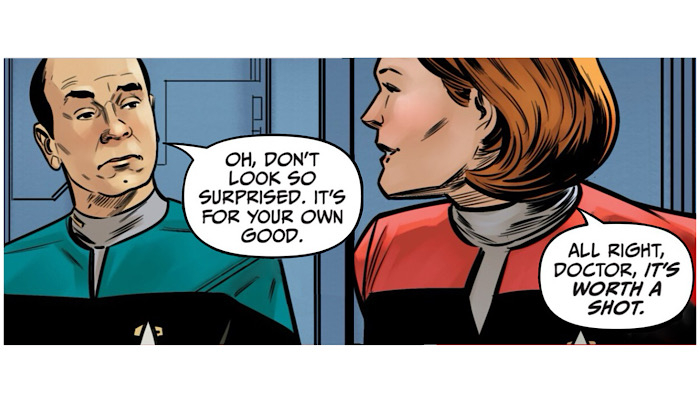
Tilly: A little of both. We do edit as we go, but afterwards we get notes from the editor saying where there’s so much dialogue that we’re not going to see the art – we need to cut it back even more. That was really tough, especially with the character of the Doctor because he’s so verbose! In our first drafts, it was fun to just let him blab and blab the way he does on the show. But of course – on screen, his dialogue doesn’t obscure his face! So we just had to cut and cut and cut that back. In fact, I think most of the dialogue editing we had to do was with the Doctor.
Susan: We had so many funny things for him to say! We were like, “There’s no room to have him say this? Oh, what?” But it has to be done; you have to see the art!
Amazing! And that aside, what was the biggest challenge on this project?
Susan: Hmmm. Maybe just making sure we shared the relevant background information for Species 8472 because you want people to remember the cracks we’re going into from the episode In the Flesh where they meet the fake Boothby at the Starfleet Academy terrasphere simulation.
Right! And what does happen at the end of that? They arrange a truce? Spoilers! They arrange a truce and give Species 8472 sensitive tactical information…
Tilly: Right! As a gesture of faith. And a lot of people remember that; that Janeway comes to an understanding with the Boothby character. Things look okay! But actually, he outright says that his superiors aren’t as forward-thinking as he is… They’re going to hit the roof at the idea of peace with humans.
Yes! “Don’t call us, we’ll call you…”!
So when we saw that, we were like, “Aha! There’s a story there!” And there’s another moment in that episode when they took Chakotay into custody and took some of his DNA… That never comes up again; it’s never explained. Why did they do that? Why do they need his DNA?
That’s a great point!
Tilly: I also feel like one of the toughest challenges was that – because we didn’t get closure from the original show – I feel like fans had an idea in their head of what those reunions might have looked like for 30 years… And it’s impossible to live up to every single person’s different idea of that! So we tried to give all the characters what we felt was a decent reunion; true to them and true to what we – as fans ourselves – were hoping they’d have, hoping that it would connect with the audience and what they were wanting to see…
Susan: I think many fans would’ve wanted five issues of hugs, but we couldn’t do that!
It that a concern as you write? How will fans react?
Tilly: In terms of wanting to make fans happy and give them what they’d like to see, it’s on our minds – but it’s not necessarily a concern as we write. As I say, we’re fans ourselves, and we have to make ourselves happy with it first… If we don’t love the story, it’ll show no matter what the story is! Because you can always tell when the creator’s heart isn’t in something, can’t you? And you can’t write to that because everybody has their own ideas and wants something different. Also, we try not to break established continuity – even though some Star Trek stories break their own.
And something you said earlier made me wonder: were there other plots or adversaries that you particularly wanted to pursue?
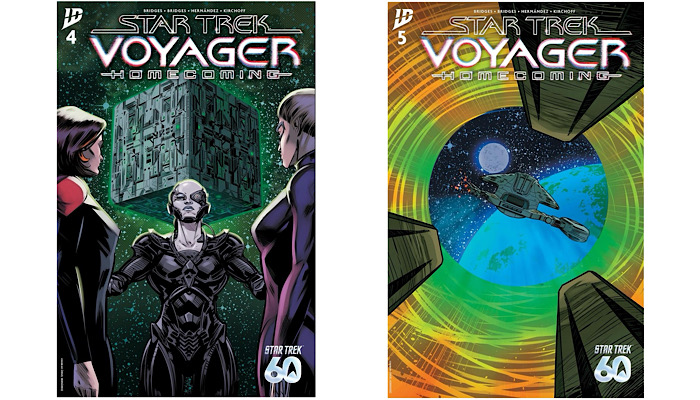
Tilly: There were other ideas, but this was the one that worked the best with the story we wanted to tell about a society that pushes out people because of their differences – which is a very Star Trek thing to talk about. It’s also something we’re all dealing with in so many different ways in our present society. So Species 8472 let us get into that in such a great way – none of the other adversaries would’ve given us that ability quite so well.
Yes. And that’s another element I suppose it’s easy to overlook… It’s not just that you have to serve your own vision, the expectations of fans, the IP owners and the publisher… You also want to tell a story that’s expands the franchise with purpose. Did you have other goals in mind when you started?
Tilly: One thing this story helped us do was break up Chakotay and Seven of Nine… That was one of our goals because we never liked them together. But I’m glad you brought that up because it’s about respecting continuities… Even though we never liked their relationship, there are people who did. We want to respect those people, and the creative teams that were on the show that did that story. We don’t just want to make a hand wave and say, ‘No, this never happened!’
Or leave it to happen off screen…
Tilly: Exactly. We wanted to build off that because Seven is a very different character when we see her return in Picard. So what changed for her? What set her along that path? What self-discovery did she have? How do we incorporate that and tie it in with the story we’re telling? Which also really worked very well with our story because Chakotay had a little relationship with one of the Species 8472 in the guise of Valerie Archer. So that tied together as well.
Yes, it’s worth noting that you very tastefully and respectfully bridged a gap between two separate branches of canonised IP…
Tilly: Thank you. We did want to show the characters as respectful adults who care about each other, who are friends who don’t want to hurt each other. There’re issues that they needed to work out and maybe it isn’t quite working for them… And that’s okay!
Wonderful! Are there other ‘dream licenses’ that you’d like to work on?
Tilly: Oh, absolutely! We’re actually working on one now that we’re not allowed to say anything about because it’s not been announced yet… It’s another graphic novel that should be out next year. That’s very much a dream project – we were very lucky to get to do it! But there are plenty of other licenses because we’re fans of sci-fi especially.
Susan: Our problem is that we like dramedy and funny stuff; we like to keep things lighter. So there are some things – like Alien, say – that it’s harder to add a little humour into. I mean, you could always adjust these things, but Star Trek is often funny. We’d love to work on a live-ation Star Trek show. What else are we fans of? Alien, Superman. Terminator…
Tilly: I’m dying to work on Terminator! That would be so cool. I’d also love to do something with Furiosa from Mad Max: Fury Road. I love her! I’d love to dig into that… There’s just piles of stuff that we’d love to do someday.
Great answers! Thank you! To wrap things up, what’s the one question I could’ve asked today, but didn’t?
Tilly: I can tell you the one question most people ask us about Homecoming…
By all means!
Tilly: “Why didn’t you promote Harry Kim?”
Ha! Is that really the question you get most? People are all over that, aren’t they? Ha! But what’s the answer to that? Why didn’t you promote Harry Kim?
Tilly: Our answer to that is: “We asked if we could!” That was the first thing we wanted to do… The second was to break up Chakotay and Seven, but the first question was: can we promote Harry? And the answer was no.
Did they say why?
Tilly: Yes, its because there’s a story somewhere in the Star Trek universe that takes place chronologically after ours… And in THAT story, Harry Kim is still an ensign! I don’t recall if it was in a book or a comic or what, but something somewhere says he’s still an ensign. So we couldn’t promote him in our story because they do keep continuity among the official Star Trek books and other media… Instead of promoting him, we had his parents call it out: “You’re still an ensign? I need to talk to your captain. This is unacceptable!”
Ha! That’s funny! And you’ve made me realise that there must be a team of people, or one overworked soul, whose job it is to track continuity in all the timelines in all the universes. Ha!
Tilly: Yes! Ha! Some of the feedback we were getting – particularly early on – was from that department saying, “Sadly, you can’t use this person… They’re over there!” You know? “You can’t use this or that, because this is happening in your timeframe…”
Can you give me a specific example of that?
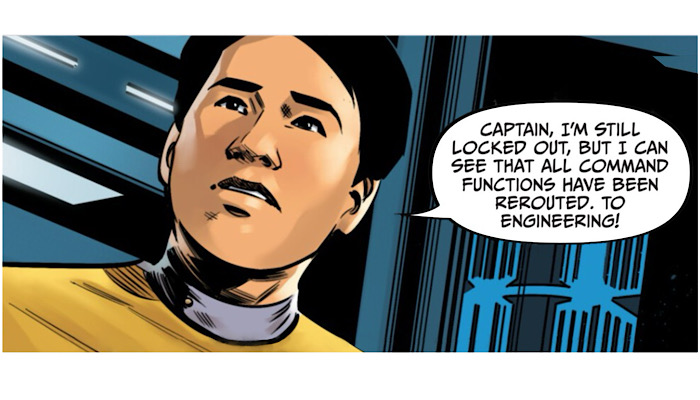
Tilly: Yes – the reunions are a good example… We’re big fans of Dr. Pulaski, and it was great to put her in the last issue. But initially, we wanted to have Crusher and Bashir meet the doctor. But that was one of the things we couldn’t do because – at this exact moment in the universe, they were both elsewhere. And the continuity person knew it! But they agreed Pulaski would probably be on Earth, so we could use her.
How fantastically interesting! I wonder if I could find this ‘Guardian of Forever’ to do an interview! I’ll get onto that. In the meanwhile: Susan, Tilly – thank you so much for making time.

Lindsay Hampton – Co-President and Founder at Volt Factor – discusses brand plans for creators like TheBurntPeanut, Alan Chikin Chow and That’s Amazing.
“How far we let a partner push it always comes back to that same question: Does the emotional logic hold?” In conversation with Carlos Villagra, Cloudco Entertainment’s Head of Creative.

“We see significant growth potential for Wrexham as a football club, a lifestyle brand and content-driven IP”: In conversation with Robyn Cowling, Head of Licensing at Aykroyds.

“We have lots of ideas and ambition, because the scope of this new adventure is huge!”: In conversation with SBC’s Sophie Bloomfield and tonies’ Rodolfo Amaya.
Brands Untapped’s Billy Langsworthy heads to Milan to chat with Tela’s Gabi Drew and Nicol Vircillo about fandom – and why brands can benefit from a focus on human connection.

“Jem is an artist – and what comes with that is touring, residency shows and other theatrical pieces”: In conversation with Matt Proulx, SVP of Global Experiences, Partnerships, and Music at Hasbro.

Receive the Brands Untapped Newsletter





Enter your details to receive Brands Untapped updates & news.