—-
To stay in the loop with the latest features, news and interviews from the creative community around licensing, sign up to our weekly newsletter here





Sasha Reid and Cathy Snow talk Gertrude Jekyll, style guides and creative collaborations.
Cathy, it’s great to catch up. For those new to the Gertrude Jekyll style guide, who is Gertrude Jekyll and what have you guys looked to capture in this guide?
Cathy Snow, Licensing Manager, RHS: A key figure in the Arts and Crafts movement, 1861 saw Gertrude Jekyll enrol at the National School of Art in Kensington, where she learned botanical drawing and other disciplines. She exhibited her paintings from 1865 at the Royal Academy and her work was commended by John Ruskin.
Her association with English architect Edwin Lutyens, for whose projects she created numerous gardens, was heavily influenced by the Arts and Crafts movement and known for including handcrafted details, natural materials and blending with the surrounding landscapes.
Jekyll’s eyesight was severely impaired by progressive myopia, leading her to abandon painting and other close-work crafts in her 40s. However, she went on to draft many books on garden design, planting and the relationship between gardens and architecture. She designed over 400 gardens in the UK and Europe and while she never visited the US, she also designed three gardens there.
“I spent a lot of time studying her oil and watercolour paintings and the colour palettes she preferred, trying to capture the movement of her brush strokes.”
Terrific, and her work is represented in your collections?
Cathy: Yes, her work is well-represented in the RHS Lindley Collections through a collection of her notebooks, watercolours and other materials, highlighting her artistic talent and design process. Additionally, the RHS recognised her contributions to horticulture through the naming of plants like the rose ‘Gertrude Jekyll’ and the vinca ‘Gertrude Jekyll’.
Jekyll was also the first woman, alongside Ellen Willmott, to be awarded the Victoria Medal of Honour by the RHS in 1897. This prestigious award is the highest accolade the RHS gives to British horticulturists.
When did you first explore her work with licensing?
Cathy: We showcased a sample of Gertrude Jekyll patterns in 2022, with the release of a small collection of four prints which were an instant hit with licensees. We thought the simple, yet recognisable, forms of flowers and foliage – and the repeat patterns – would work well on textiles and homewares. Almost immediately, Radley, an industry-leading name in expertly made leather handbags and accessories, incorporated one of the patterns into its RHS x Radley 2024 Collection design.
Elsewhere, Dexam used two of the patterns on a range of kitchen textiles and Atlantic Mats used one pattern within the RHS Bloom washable mat collection. Sofas and Stuff created a comprehensive range of upholstery fabrics from these patterns and from her wider collection of sketches.
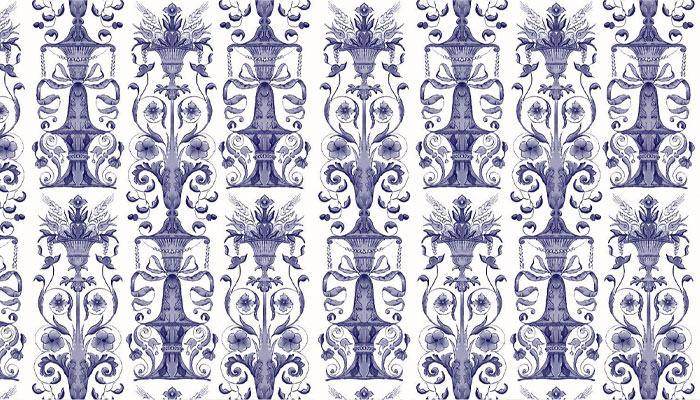
Then, last year, to build on this success, we worked with design agency Fuchsia & Fig to take some of Jekyll’s unfinished sketches and designs to create a beautiful collection of ‘inspired by’ patterns and images for use on products for home, gift and beyond.
Perfect place to bring Sasha in! Sasha, when starting out on this project, how did you get to grips with Gertrude Jekyll’s work?
Sasha Reid, Pattern Designer and Founder of Fuchsia and Fig: When starting this project, I really wanted to stay true to Jekyll’s style as much as possible. As her original sketches are so delicate, I didn’t want to lose her essence when reworking the fine pencil and pen sketches to more bold, colourful repeat patterns.
I therefore spent a lot of time studying her oil and watercolour paintings and the colour palettes she preferred, trying to capture the movement of her brush strokes. I particularly enjoyed how a lot of the designs are mirrored images. Having only one half of the sketch as a starting point and using tools to digitally mirror the drawing while I was working was so exciting as I had the final design slowly revealed to me… I was often uncertain how the final image would look until it was completed!
“We wanted to capture the natural qualities Jekyll was well known for, as well as the colour that all her planting schemes included.”
Amazing. And what aspects of her work did you feel it was important to capture in this guide?
Sasha: A clear observation one can make about of Jekyll’s work was her fascination with how the floral aspect meets geometric pattern work; this was in keeping with the Arts and Crafts movement of her generation. I wanted to capture how elaborate her designs are and bring her vision to life through a modern lens, which I think digital illustrations capture nicely.
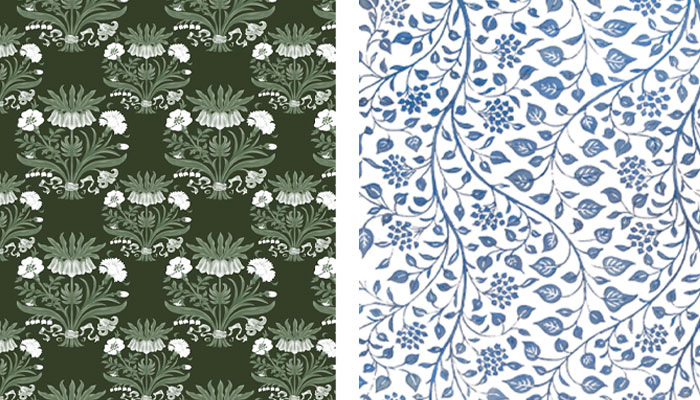
Cathy: The colour palettes used have been inspired by Gertrude Jekyll’s art and her use of earthy, rich tones within her planting schemes that reflect the natural world at its finest. We wanted to capture the natural qualities Jekyll was well known for as well as the colour that all her planting schemes included – while staying authentic to Gertrude’s original work. I think the guides have done this really well.
What was that process like turning these assets into something ‘licensing-ready’?
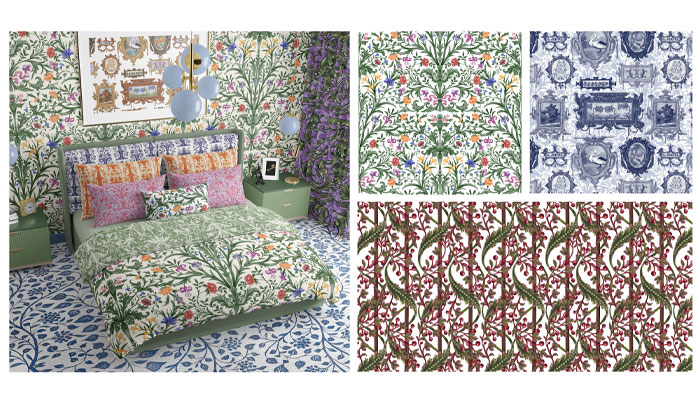
Sasha: I would simply redraw the original sketches digitally as a starting point, then build up the colour and texture until I was happy with the final design. I think both the repeat tiles and assets I’ve worked on are great because they will look amazing on a whole range of homeware and giftables. They truly give Jekyll’s sketches a whole new lease of life.
What for you makes for an effective style guide?
Cathy: Relevance and authenticity are integral to all of our style guides. We always include references to the original artwork as well, so designers can see how the style guide relates back to the RHS Lindley Collections and ultimately, of course, to the consumers that purchase our licensed products. From experience, we’ve found if we step too far away from the original imagery, we lose that relevance. But we also like to encourage licensees to be creative. So all of our style guides also offer some creative freedom. This really works for us and has resulted in some fantastic licensed products produced by our amazing licensees, past and present.
And Sasha, from your side, what makes a good style guide brief?
Sasha: Simplicity and clarity. The team at the RHS were a breeze to work with as it was very much a case of: “Here are the sketches, turn them into patterns. These are the elements we’d like to highlight in particular.” In fact, I was given a lot of artistic license with this project. Once I gave my pitch of what I envisioned for Jekyll’s work and the RHS licensing team were happy with what I presented, I just had so much fun playing around with colours and compositions. It led to hours of joyous drawing where I became well acquainted with Jekyll’s sketches and style of drawing.
You could describe this as the ultimate collaging project, taking little references here and there, using as many studies as possible to make intricate, statement pieces. I thoroughly enjoyed it.
And Cathy, which categories do you see this guide suiting best?
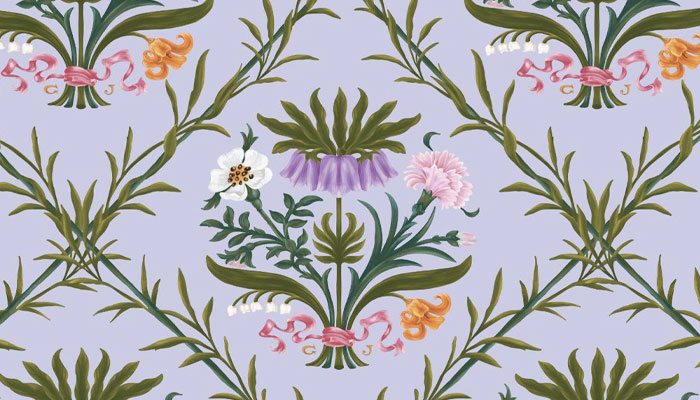
Cathy: We’ve already seen interest in using the guide within the home and gift product categories. We also think it works well on apparel and accessories, and stationery. We’re keen to add a jewellery licensee to our portfolio. In fact, stage two of the Gertrude Jekyll style guide picks out some of her standalone designs that would work perfectly here. Stay tuned for the stage two launch!
Will do! Finally, what is the key to positive collaborations between an IP owner like RHS and a creative agency like Fuchsia & Fig?
Sasha: The RHS has such a vast collection of botanical resources that are unique and exclusive to the charity, and it was so much fun to have the opportunity to work with the licensing team. It’s been such a positive collaboration – being able to input my own artistic style on these historical references yet still be in keeping with the RHS brand, but in a new, exciting way.
“RHS Licensing likes to encourage new talent and do things a bit differently.”
I am so grateful that the RHS is willing to collaborate with new independent freelancers like myself. Relationships like ours give new, up-and-coming creatives exposure within the industry on a national scale. That is truly incredible.
Cathy: RHS Licensing likes to encourage new talent and do things a bit differently. Over the years I think that’s become a USP for us. Fuchsia and Fig is fairly new to the licensing scene. One of the positives was that after initial conversations where we explained what we were looking for, Sasha did her own detailed research and came back with her thoughts and ideas without us prompting her too much. This was a huge bonus.
We were looking for a fresh creative style guide, not a formulaic one that was overly rigid in how it could be used. In fact, the majority of our style guides invite licensees to be creative and have fun with the artwork rather than be too descriptive and restrictive. Because of Fuchsia & Fig’s approach, we had complete trust in Sasha and left her to create the patterns from the original artwork we provided. The whole licensing team enjoyed working with her and we hope to do more with her in the future.

Dark art, fashion and mental-health awareness: in conversation with Any Means Necessary’s Shawn Coss.

“There is a massive market being ignored”: Rich Woodall, Head of Awesome at Kawaji, shares anime insights, approval pain-points and plans for this year.

“The independents do an amazing job with licensed toys”: In conversation with licensing stalwart, Lucy Wynn-Jones.

From the rise of AI to a Hello Kitty and Friends Inflatables style guide… Jemima Chamberlain talks us through 2025 highlights, challenges and surprises.

From Baby Evie style guides to Warner Bros takeover bids… Dot Dash Design’s Paula Rich and Christa Mavroudis reflect on 2025.

From KPop Demon Hunters to the rise of the Norman… Independent creative Danny Heffer on the highs and lows of 2025.









Enter your details to receive Brands Untapped updates & news.